When dealing with water-related challenges, it’s essential to have the right tools at your disposal. Effective water extraction techniques can greatly reduce damage and expedite recovery. Submersible pumps, wet/dry vacuums, and truck-mounted extractors each offer unique advantages tailored to various flooding scenarios. Understanding how to implement these methods can make all the difference in your response efforts. Let’s explore the specifics of each technique and its best use cases.
Key Takeaways
- Utilize submersible pumps for efficient underwater water extraction in basements and flooded areas.
- Employ wet/dry vacuums for versatile water removal of both liquids and solid debris.
- Opt for truck-mounted extractors for rapid and large-scale water extraction in severe flooding situations.
- Ensure timely water removal to prevent secondary damage from prolonged moisture exposure.
- Regular maintenance of equipment, including inspections and cleaning, enhances effectiveness in flood recovery efforts.
Submersible Pumps
When faced with flooding, using submersible pumps can be an effective solution for water extraction. These pumps are designed to operate underwater, making them ideal for removing water from basements or flooded areas.
You’ll find various submersible pump types, including drainage, sewage, and utility pumps, each suited for specific applications. Selecting the right type based on your needs can markedly enhance efficiency.
Proper submersible pump maintenance is essential for ensuring peak performance and longevity. Regularly inspect the pump for debris, check the electrical components, and clean the filters to prevent clogs.
If you notice unusual sounds or vibrations, addressing these issues promptly can prevent costly repairs.
Wet/Dry Vacuums
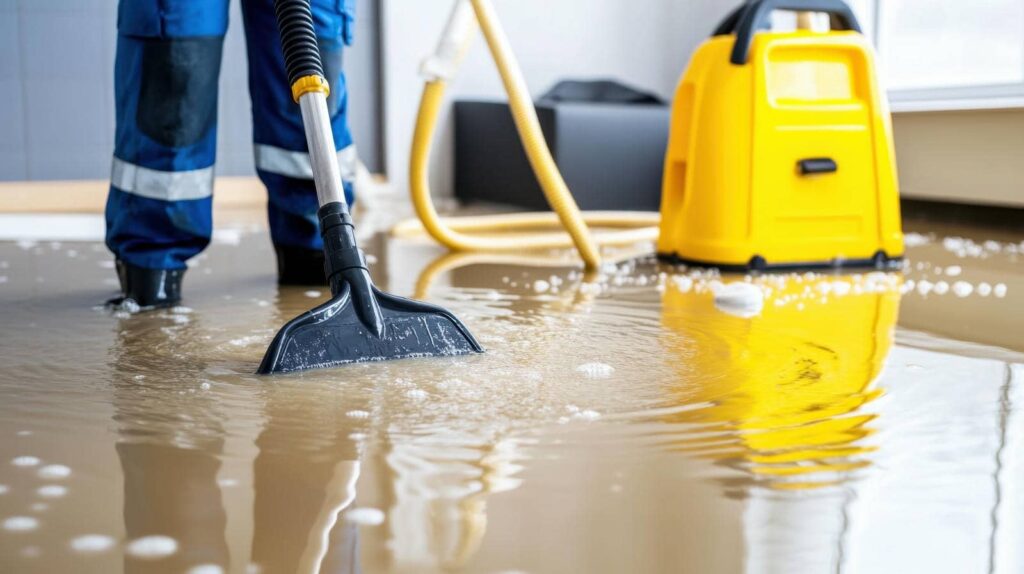
Although submersible pumps are highly effective, wet/dry vacuums offer a versatile alternative for water extraction in flooded areas. These vacuums are designed with powerful motors and durable construction, enabling you to tackle both liquid and solid debris.
Key wet/dry vacuum features include adjustable suction power, large capacity tanks, and various attachments that enhance your cleaning efficiency.
To maximize your vacuum’s performance, follow essential vacuum maintenance tips. Regularly empty the tank to prevent clogs and ensure peak suction.
Check and clean the filters frequently, as dirty filters can reduce efficiency. Additionally, inspect the hoses and attachments for wear or damage, and replace them as needed.
Truck-Mounted Extractors
Truck-mounted extractors are a powerful solution for large-scale water extraction in flooded areas. These machines are equipped with high-capacity pumps and tanks, enabling them to remove significant volumes of water quickly and efficiently.
Unlike portable extractors, which are limited in capacity and power, truck-mounted units can tackle extensive industrial applications where time is critical.
When you’re dealing with severe flooding, these extractors can save you valuable time and resources. Their integrated systems allow for swift deployment, reducing downtime and enhancing recovery efforts.
Plus, their mobility means they can reach hard-hit areas that may be difficult for smaller equipment.
Using truck-mounted extractors ensures thorough water removal and helps prevent secondary damage from prolonged exposure to moisture.
In flood recovery, efficiency matters, and these systems deliver the performance you need to restore your environment effectively.
Frequently Asked Questions
How Do I Choose the Right Water Extraction Technique for My Situation?
To choose the right water extraction method, assess your situation thoroughly. Analyze the type and volume of water, affected materials, and urgency. This ensures effective, tailored solutions, minimizing damage and promoting a safe recovery process.
What Safety Precautions Should I Take During Water Extraction?
Before starting, don your safety gear to protect against electrical hazards lurking in the water. Make certain you’ve turned off power sources, and always keep a safe distance from potential risks. Your safety’s paramount—don’t take chances!
Can I Use Household Items for Water Extraction?
Yes, you can use household tools like mops, buckets, and towels for water extraction. DIY methods, such as using a wet/dry vacuum, can effectively remove water, making your efforts more efficient and less overwhelming.
How Long Does Water Extraction Typically Take?
Imagine a sponge soaking up water. Water extraction duration varies, typically taking several hours to days, depending on extraction efficiency and the water volume. Quick action improves outcomes, ensuring your space becomes livable again sooner.
What Should I Do After Extracting the Water?
After extracting the water, focus on post-extraction cleanup and moisture control. Ensure thorough drying of affected areas, check for mold, and use dehumidifiers to maintain ideal humidity levels, preventing future damage and promoting a healthy environment.
Summary
In flood situations, choosing the right extraction technique is essential. Submersible pumps provide rapid removal, wet/dry vacuums offer flexibility for diverse debris, and truck-mounted extractors deliver power for large areas. Each method serves a specific purpose, ensuring efficient and effective water removal. By understanding their unique advantages, you can respond swiftly and minimize damage. Remember, proper maintenance of these tools is key to maximizing their performance, and being prepared can make all the difference when disaster strikes.