
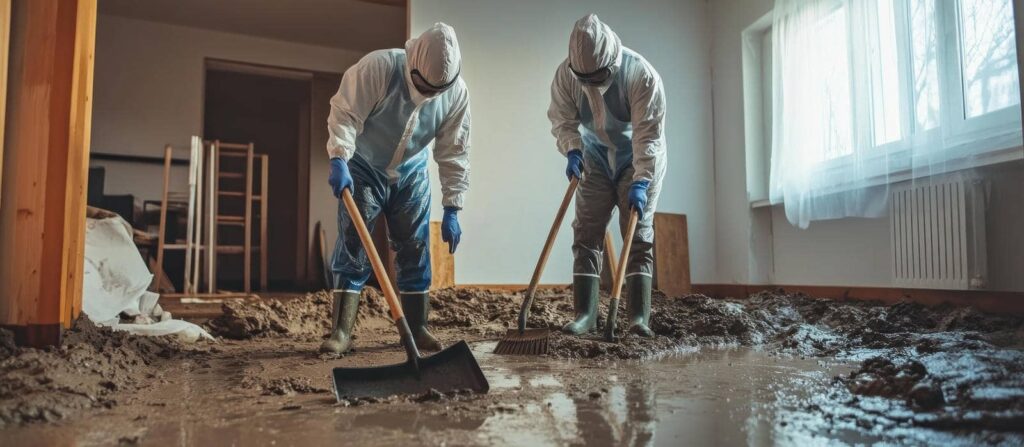
Imagine standing in a room with water pooling at your feet, the air thick with humidity. You need a plan to tackle the water damage chaos efficiently. First, assess the extent of the damage and identify the source of the water. With the right tools and a methodical approach, you can restore your space. Let’s explore the essential steps to effectively manage water extraction and drying, ensuring your property is protected from future issues.
Key Takeaways
- Identify the source of water damage and stop the leak before beginning cleanup efforts.
- Use a high-capacity wet/dry vacuum to extract standing water efficiently.
- Increase air circulation with fans and dehumidifiers to expedite the drying process.
- Remove damaged materials, such as drywall and carpets, to prevent mold growth.
- Regularly inspect and waterproof vulnerable areas to prevent future water damage.
Assessing the Extent of Water Damage
Before you can effectively tackle water damage cleanup, you need to assess the extent of the damage thoroughly. Start with water source identification; tracing the origin of the leak or flood is essential.
Check for visible signs of moisture, such as damp walls, ceilings, or flooring. Use a damage assessment checklist to ensure you cover all areas. Inspect each room systematically, noting any affected materials like drywall, insulation, and flooring.
Pay attention to hidden spaces, such as behind appliances or under sinks, where water might accumulate unnoticed. Document your findings meticulously, as this will guide your cleanup efforts and help you prioritize which areas need immediate attention.
Be sure to assess the severity of the damage—whether it’s minor, moderate, or severe—since this will influence the tools and techniques you’ll need later. Your methodical approach now will ensure a more effective and thorough cleanup process down the line.
Essential Tools and Materials for Cleanup
Having the right tools and materials is essential for an effective water damage cleanup. Start with a high-capacity wet/dry vacuum for efficient water extraction; it’ll help you remove standing water quickly.
Invest in a moisture detector to identify hidden damp areas, ensuring you don’t miss spots that could lead to mold growth later.
You’ll also need fans and dehumidifiers to promote air circulation and expedite drying. A utility knife is handy for cutting out damaged drywall, while heavy-duty trash bags will help you discard debris efficiently.
Don’t forget personal protective equipment, like gloves and masks, to keep yourself safe during the cleanup.
Finally, stock up on cleaning solutions specifically designed for water damage restoration to sanitize affected areas. With these tools at your disposal, you’ll be well-equipped to tackle the challenges of water damage cleanup effectively.
Step-by-Step Water Extraction Process
Start by evaluating the extent of the water damage to determine the best approach for extraction. Conduct a thorough damage assessment, checking for standing water, saturated materials, and potential contamination.
Once you’ve identified the areas affected, gather your tools: a wet/dry vacuum, mops, and buckets.
Begin the water extraction process by using the wet/dry vacuum to remove standing water. Move efficiently through each room, focusing on the most flooded areas first. If water seeps into carpets or upholstery, lift these items for more effective extraction.
After vacuuming, use mops and towels to soak up residual moisture. Pay special attention to corners and crevices, as water often collects there.
Dispose of any materials that can’t be salvaged, like damaged insulation or flooring, to prevent future issues. Completing these steps will lay a solid foundation for the subsequent drying process.
Effective Drying Techniques for Affected Areas
Once you’ve completed the water extraction process, it’s essential to initiate effective drying techniques to prevent mold growth and further damage.
Start by increasing air circulation in the affected areas. Open windows and doors to allow fresh air to flow through, and use fans to enhance airflow. Position the fans strategically to create a cross-breeze, which accelerates moisture removal.
Dehumidifiers are also vital; they extract excess moisture from the air, helping to lower humidity levels. Set them at a low temperature for peak performance.
For surfaces like carpets and walls, consider using a wet/dry vacuum to assist in moisture removal. Regularly check for dampness, especially in hidden spaces like under sinks and behind appliances.
Preventing Future Water Damage Issues
Because water damage can lead to considerable structural issues and health concerns, implementing preventive measures is crucial for safeguarding your home.
Start by evaluating your property for vulnerabilities, such as cracks in the foundation or gaps around windows and doors. Applying effective waterproofing measures, like sealants or membranes, can considerably reduce water infiltration.
Additionally, invest in reliable drainage solutions. Verify gutters and downspouts are clean and direct water away from your home’s foundation.
Consider installing French drains or a sump pump in areas prone to flooding.
Regularly inspect your plumbing for leaks, and keep an eye on appliances like washing machines and water heaters.
Frequently Asked Questions
How Can I Identify Hidden Mold After Water Damage?
To identify hidden mold, conduct a moisture assessment using a hygrometer. Check for damp spots, musty odors, and discoloration on walls or ceilings. Mold detection kits can also help confirm spores in the air or on surfaces.
What Are the Health Risks Associated With Water Damage?
Water damage can lead to mold exposure, which may cause respiratory issues like asthma or a chronic cough. You should monitor your environment closely and address any signs of mold promptly to protect your health and well-being.
How Long Does Water Damage Cleanup Typically Take?
Cleanup duration varies, typically ranging from a few days to weeks, based on the severity of damage. You’ll need to take into account drying times, mold prevention, and restoration processes to ensure effective, thorough recovery.
Can I File an Insurance Claim for Water Damage?
Yes, you can file a claim for water damage under your insurance policy. Start by documenting the damage thoroughly, then follow your insurer’s claim process to ensure a smooth experience and maximize your chances of approval.
When Should I Call a Professional for Water Damage?
You should call a professional for water damage if the area is extensive, mold appears, or if you can’t fully dry out the space. Their professional services ensure thorough cleanup and prevent long-term structural issues.
Recap
You’ve taken the right steps to tackle water damage effectively. By evaluating the situation, using the right tools, and applying thorough drying techniques, you’ve addressed the immediate problem and set the stage for future prevention. Coincidentally, by being diligent now, you reduce the chances of facing similar issues later. Remember, consistent maintenance and vigilance are key to protecting your property. Stay proactive, and you’ll keep water damage at bay for good.