
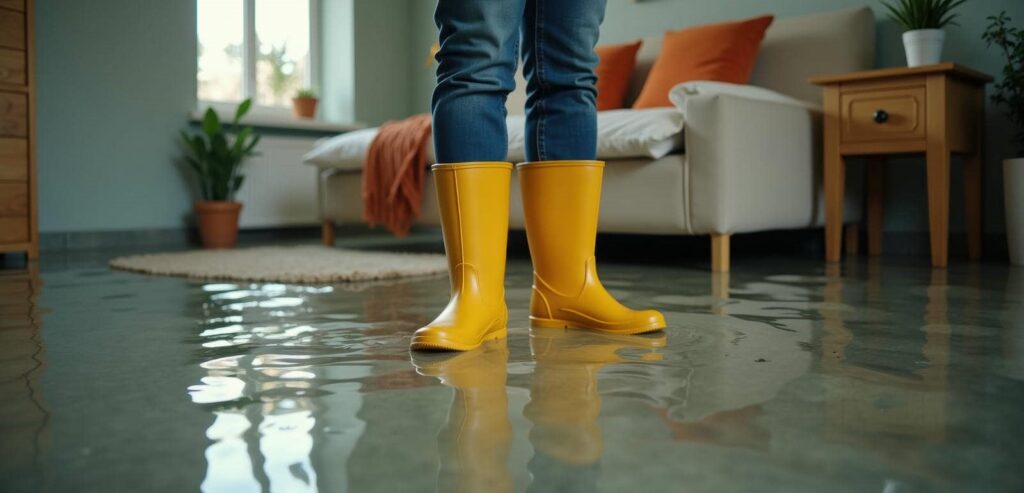
When your home floods, quick action is vital. First, you need to assess the damage and ensure your safety. This involves turning off utilities and documenting everything for your insurance claim. Once you’ve got that covered, you’ll move on to removing standing water and cleaning affected areas. But the process doesn’t end there; understanding how to salvage your belongings and implement preventive measures is just as important. Let’s take a closer look at each step.
Key Takeaways
- Inspect and document damage in each room, focusing on structural integrity and affected belongings for insurance claims.
- Ensure safety by turning off utilities, wearing protective gear, and checking for hazards like gas leaks.
- Remove standing water and debris, then clean and disinfect surfaces with appropriate cleaning products.
- Evaluate furniture and appliances for restoration potential, considering both sentimental and monetary value in your decisions.
- Repair damage, contact insurance, and implement preventive measures like flood barriers and improved drainage systems to avoid future flooding.
Assessing the Damage
When you face the aftermath of a flood, the first step is evaluating the damage to your home. Begin by inspecting each room, focusing on walls, floors, and ceilings. Look for signs of water damage, such as discoloration, peeling paint, or bulging materials.
Check for structural integrity, ensuring walls and beams remain stable. If you notice sagging or cracks, it’s essential to document these issues for insurance purposes.
Next, assess your belongings. Salvage what you can, but be mindful of items affected by mold or severe water damage. Take photos to support your claims and help you remember what you lost.
It’s also wise to consult professionals if the damage seems extensive. They can provide a thorough evaluation and advise on necessary repairs.
Taking these steps helps you reclaim your space and fosters a sense of belonging as you work towards recovery.
Ensuring Safety
After evaluating the damage, your next priority is ensuring safety in your home. Start by wearing personal protective equipment such as gloves, boots, and masks to shield yourself from hazardous materials and contaminants.
Remember, floodwaters can carry bacteria and sharp objects, so take this seriously.
Make sure to assess your surroundings. Look for any structural issues or unstable areas that could pose a risk. If you encounter any electrical hazards, avoid contact and follow emergency procedures to address them.
Check for gas leaks as well; if you smell gas, evacuate immediately and call for help. Stay tuned to local news for updates on safety information.
Lastly, keep your loved ones close and communicate clearly about what steps you’re taking. Ensuring safety isn’t just about protecting yourself; it’s about creating a secure environment for everyone in your home.
Turning Off Utilities
Before you begin the cleanup process, it’s vital to turn off your utilities to prevent further hazards. Start with the electricity; locate your main circuit breaker and switch it off. This utility shutoff is key to avoid electrical shocks or fires.
Next, shut off the gas supply if you smell any gas or suspect leaks. Your safety comes first, so follow emergency protocols diligently.
Then, turn off your water supply to prevent additional flooding. Locate the main water valve, usually found near your water meter, and turn it clockwise to shut it off.
Once these utilities are off, you’ll reduce the risk of accidents and make the cleanup more manageable.
Documenting the Damage
Once you’ve confirmed your safety, it’s vital to document the damage.
Start by taking thorough photos of affected areas and items.
Then, make a detailed list of all damaged belongings for insurance purposes.
Take Comprehensive Photos
Taking thorough photos of the damage is essential for effective flood recovery. Start by capturing wide shots of each affected room to provide context, then zoom in on specific areas to highlight the details.
This photo documentation serves as visual evidence for insurance claims and restoration efforts. Make certain to photograph damaged furniture, appliances, and structural elements. It’s helpful to document the water level and any standing water as well.
Organize your photos in chronological order, showing the progression of the damage over time. Remember, clear and detailed images will support your case and ensure you receive the help you need.
List Damaged Items
After documenting the damage through photos, the next step is to create a detailed list of all damaged items.
Start by categorizing your belongings—furniture, appliances, electronics, and personal items. For each item, note its condition, estimated value, and salvage value if applicable.
This list will be essential for your flood insurance claim, as it provides a clear account of your losses. Be as specific as possible, including brand names, model numbers, and purchase dates.
If you’re unsure about the value, research similar items online. Having an extensive list will help you recover financially and give you a sense of control during this overwhelming process.
Removing Water
Start by evaluating the extent of the water in your home. Check each room for standing water and note the areas most affected.
For effective water extraction, you’ll need a submersible pump or a wet/dry vacuum. If using a pump, make certain you understand the pump operation and position it in the deepest part of the flooded area.
Begin the water extraction process by removing as much water as possible. Work methodically, starting from the farthest point and moving towards exits to prevent trapping water behind you.
If the flood is severe, consider calling in professionals who’ve the right equipment for quick and efficient water removal.
Stay safe—turn off electricity in flooded areas to avoid hazards.
Once you’ve extracted the water, your next steps will focus on drying out the property and examining damage further.
Drying Out the Property
Once you’ve removed the water, drying out your property is essential to prevent mold growth and structural damage.
You’ll need the right tools, like fans, dehumidifiers, and moisture meters, to effectively dry the space.
Acting quickly can make a significant difference in the recovery process.
Importance of Quick Drying
While it’s easy to overlook, quick drying is essential in minimizing damage to your home after a flood. Rapid moisture control helps prevent mold growth and structural issues that can arise from prolonged dampness.
By using effective drying techniques, you can considerably reduce health risks and restore your space more efficiently.
Start by removing standing water immediately and ventilating the affected areas. Use fans, dehumidifiers, and open windows to enhance airflow and speed up the drying process.
Tools for Effective Drying
To effectively dry out your property after a flood, you’ll need the right tools at your disposal.
Using the right equipment speeds up the process and helps prevent mold growth.
Here are some essential tools to evaluate:
Dehumidifiers: They extract moisture from the air, showcasing significant dehumidifiers benefits for reducing humidity levels.
Industrial fans: These powerful fans circulate air, promoting faster drying of surfaces and materials.
Moisture meters: Use these to monitor dampness in walls and floors, ensuring thorough drying.
Squeegees and mops: Clear standing water before using other tools to maximize efficiency.
With these tools, you’ll create a safer, drier environment for you and your loved ones.
Cleaning and Disinfecting
Start by removing any standing water and debris from your flooded home, as this is crucial for effective cleaning and disinfecting.
Once that’s done, gather your cleaning supplies. You’ll need buckets, mops, sponges, and a strong detergent.
Next, tackle surfaces such as floors, walls, and furniture. Use appropriate disinfecting methods, like a mixture of bleach and water (1 cup of bleach to 5 gallons of water) for non-porous surfaces.
Always wear gloves and verify the area is well-ventilated.
After cleaning, let surfaces dry completely before applying any sealants or paints.
If you have porous materials, like carpets or upholstered furniture, consider replacing them, as they may harbor bacteria or mold.
Salvaging Belongings
After cleaning and disinfecting your home, it’s time to assess your belongings for damage.
Identify which items can be cleaned and restored, and which ones may need to be disposed of.
This process will help you make informed decisions about salvaging what you can.
Assessing Damaged Items
When evaluating damaged items after a flood, prioritize your belongings based on their value and condition.
Begin with a thorough furniture appraisal and appliance evaluation to determine what’s salvageable.
Consider the following when reviewing your items:
Sentimental Value: Items with personal significance might be worth the effort to restore.
Monetary Value: High-value items should be prioritized for potential restoration.
Condition: Check for structural damage or mold that could render items unusable.
Safety: Discard items that pose health risks, like contaminated materials.
Cleaning Techniques Overview
To effectively salvage your belongings after a flood, it’s essential to follow a systematic approach to cleaning.
Start by gathering necessary cleaning products like disinfectants, detergents, and mold removers. For soft items such as clothing and upholstery, use thorough washing methods, ensuring you follow care labels.
Hard surfaces can benefit from scrubbing with a mixture of water and vinegar or bleach, depending on the material’s tolerance. Remember to rinse items well to remove any residue.
For porous materials like wood or drywall, inspect closely; they may require specialized cleaning methods to prevent mold growth.
Always wear protective gear during this process to ensure your safety while restoring your cherished belongings.
Restoration or Disposal?
Determining whether to restore or dispose of belongings after a flood can be challenging. You’ll need to weigh your restoration options against disposal considerations carefully.
Here are some key factors to guide your decision:
Material Type: Evaluate if the item can withstand cleaning and restoration.
Value: Consider both sentimental and monetary value before deciding.
Condition: Inspect for mold, damage, or deterioration that may be irreversible.
Cost of Restoration: Compare costs of restoration with replacement value.
Repairing and Restoring
Once you’ve completed the initial cleanup, it’s time to tackle repairing and restoring your flooded home.
Start by evaluating the damage to walls, floors, and furniture. If you have flood insurance, contact your provider to understand your coverage for repairs. This can help alleviate some financial pressure as you move forward.
Next, consider hiring restoration professionals. They’ve the expertise and equipment to efficiently restore your home. Don’t hesitate to ask for references or consult reviews to find reputable services in your area.
For smaller repairs, you might be able to do some work yourself. Replace damaged drywall, treat mold, and ensure proper ventilation to prevent future issues.
As you repair, remember to document the process, taking photos for your insurance claims. This attention to detail can help you receive the support you need, making your home safe and welcoming once again.
Preventing Future Flooding
While you can’t control the weather, there are several proactive steps you can take to minimize the risk of future flooding in your home.
By implementing these strategies, you can create a safer environment for you and your family:
Install flood barriers around entry points to prevent water intrusion.
Enhance drainage systems to ensure proper water flow away from your home.
Regularly inspect gutters and downspouts to keep them clear and functional.
Landscape your yard with proper grading to direct water away from your foundation.
These measures protect your home and foster a sense of community security.
By taking action now, you contribute to a safer neighborhood, encouraging others to do the same.
Frequently Asked Questions
How Long Does It Take to Fully Recover From a Flooded Home?
It typically takes weeks to months to fully recover from a flooded home. Your restoration timeline includes initial cleanup, drying, and repair phases, each essential for ensuring your space is safe and livable again.
What Insurance Coverage Is Typically Available for Flood Damage?
Flood insurance typically offers coverage types like building property, personal property, and additional living expenses. Make sure you review your policy to understand what’s covered, ensuring you’re prepared for any flood-related damages in the future.
Can I File a Claim if I Caused the Flood?
You can file a claim if you caused the flood, but your liability coverage might complicate things. Flood negligence could lead to denied claims, so consult your insurance agent to understand your options better.
Are There Professional Services for Flood Cleanup I Should Consider?
Yes, you should consider professional flood restoration services. They specialize in water damage remediation, ensuring your home gets the thorough cleanup it needs. It’s a smart choice for a safe and efficient recovery.
What Are the Long-Term Health Effects of Flooding Exposure?
Imagine a hidden storm lurking in your home—flooding can lead to mold exposure, causing respiratory issues. You might not see it, but the long-term health effects can linger, impacting your life and community.
Review
In the aftermath of a flood, following these cleanup steps can feel overwhelming, but remember, each action brings you closer to restoring your home. By evaluating damage, ensuring safety, and tackling repairs, you’re not just cleaning up; you’re reclaiming your space. With preventive measures in place, you can turn this challenge into a chance for resilience. So roll up your sleeves, take it one step at a time, and soon you’ll be back in your cozy haven.