In an emergency with water damage, swift and effective action is essential. Start by evaluating the emergency water removal situation to pinpoint the source and extent of flooding. Safety is a priority, so make sure you’re equipped with protective gear and have turned off utilities. From pumps to dehumidifiers, a range of techniques can expedite water removal. Understanding these methods can make all the difference in protecting your property and preventing further damage. What’s your next move?
Key Takeaways
- Assess the situation quickly to identify the water source and evaluate damage before taking action.
- Turn off utilities, including the main power and water supply, to prevent further hazards.
- Use appropriate pumps to remove water efficiently and maintain equipment for optimal performance.
- Enhance air circulation with fans and dehumidifiers to aid in drying out the affected area.
- Consider professional water damage services for rapid response and comprehensive restoration.
Assessing the Situation
When faced with a water emergency, how do you quickly evaluate the situation? First, prioritize water source identification. Determine whether the water comes from a burst pipe, flooding, or an appliance failure. This step is essential for effective mitigation.
Once you identify the source, proceed with damage evaluation. Inspect affected areas to gauge the extent of water intrusion and potential structural damage. Check for wet materials, mold growth, and electrical hazards. Documenting these findings can help you prioritize your response and communicate with professionals if needed.
Next, evaluate the urgency of the situation. Are there immediate risks to health or safety? This evaluation will guide your next steps, whether it’s shutting off the water supply or calling for emergency services.
Safety Precautions
Although water emergencies can be chaotic, prioritizing safety is essential before taking any action.
Before you engage in cleanup efforts, make sure you’re adequately protected and aware of potential dangers. Always wear protective gear such as gloves, boots, and masks to shield yourself from contaminants.
Be mindful of electrical hazards; water and electricity don’t mix. If you see any exposed wiring or outlets submerged in water, avoid contact and let professionals handle it.
Here are a few key safety measures to keep in mind:
- Ensure proper ventilation to prevent mold growth.
- Assess the structural integrity of your surroundings before entering.
- Keep children and pets at a safe distance from the affected area.
Turning Off Utilities
Before you start any cleanup efforts, it’s vital to turn off utilities to prevent further damage or hazards.
Begin with the main power source; locate the circuit breaker and switch off the electricity to avoid electric shock or fire risks. Next, shut off the water supply at the main valve to stop any additional flooding. If gas lines are involved, locate the gas meter and turn it off as well—this action reduces the risk of leaks or explosions.
Make sure you have your emergency contacts handy, such as your utility providers, in case you need assistance. Document any utility shut-off actions you take for later reference when you report to your insurance company.
Acting swiftly and efficiently can save time and reduce potential complications during your cleanup process. Prioritizing safety by turning off utilities is a vital first step in managing water emergencies effectively.
Using Pumps for Water Removal
When dealing with water removal, selecting the right type of pump is essential for efficiency.
You’ll need to know various pumping techniques and tips to optimize the process while ensuring safety during operation.
Understanding these elements will help you effectively manage water removal in emergency situations.
Types of Water Pumps
There are several types of water pumps designed specifically for effective water removal, each serving distinct purposes based on the situation. Understanding these options can help you choose the right tool for your needs.
- Submersible Pumps: Ideal for deep water extraction, these pumps operate underwater and are efficient for flooded basements.
- Centrifugal Pumps: Best for moving large volumes of water quickly, they’re typically used in high-flow situations where speed is essential.
- Diaphragm Pumps: Perfect for transferring water with solids, these pumps handle debris without clogging.
Pumping Techniques and Tips
To effectively remove water using pumps, consider several key techniques to enhance efficiency and ensure safety during the process.
First, choose the right suction methods; submersible pumps are ideal for deep water, while surface pumps work well for shallow areas. Make certain the pump’s intake remains clear of debris to maintain peak flow.
Regular pump maintenance is essential; check for clogs and inspect hoses for leaks to prevent downtime. Always position the pump lower than the water level to maximize suction.
If you’re dealing with contaminated water, use a pump fitted with a filter to protect its components.
Safety Precautions During Operation
Although using pumps for water removal can be efficient, prioritizing safety is essential to prevent accidents and injuries. When operating pumps, make certain you take the necessary precautions to protect yourself and others from potential hazards.
- Always wear personal protective equipment (PPE), including gloves and waterproof boots, to minimize risks.
- Be aware of electrical hazards; keep pumps away from water and use Ground Fault Circuit Interrupters (GFCIs) to prevent electric shocks.
- Regularly inspect equipment for wear and damage to maintain safety and efficiency.
Utilizing Wet/Dry Vacuums
When faced with water emergencies, utilizing a wet/dry vacuum can greatly expedite the removal process. These powerful tools come with essential features like robust suction capabilities and interchangeable filters, allowing you to tackle both liquid and solid debris effectively.
To maximize efficiency, start by positioning the vacuum near the water source and ensuring the hose is securely attached.
Employ effective vacuuming techniques by moving the nozzle slowly across the wet surface, ensuring you capture as much water as possible in each pass. For larger areas, consider dividing the space into sections to maintain control and ensure thorough removal.
Always monitor the vacuum’s tank to prevent overflow, which can hinder performance.
Employing Towels and Mops
While a wet/dry vacuum is highly effective, employing towels and mops can also play an essential role in water removal during emergencies.
Using these tools properly maximizes your efforts and ensures you address the situation swiftly.
- Towel absorption: Choose absorbent, lint-free towels to quickly soak up water from surfaces. Microfiber towels can be particularly effective.
- Mop effectiveness: Use a mop with a microfiber head for better water pickup and ease of use. It allows you to cover larger areas rapidly.
- Layered approach: Combine towels for initial absorption and mops for larger spaces. This strategy enhances water removal efficiency.
Air Circulation Techniques
Effective air circulation techniques are essential in reducing moisture levels after water removal efforts. To achieve ideal results, focus on strategic fan placement.
Position fans to create a cross breeze that enhances air movement throughout the affected area. Start by placing a fan facing the wet surface to push moisture away and direct airflow toward an open window or door. This helps expel damp air while drawing in drier air from outside.
Additionally, place another fan at a diagonal angle to maximize circulation, which can further accelerate drying. If possible, utilize multiple fans to cover larger spaces, ensuring that all corners receive adequate airflow.
Remember to rotate fans periodically to adapt to changing moisture levels. By implementing these air circulation techniques, you’ll considerably reduce drying time and create a more comfortable environment as you tackle water damage effectively.
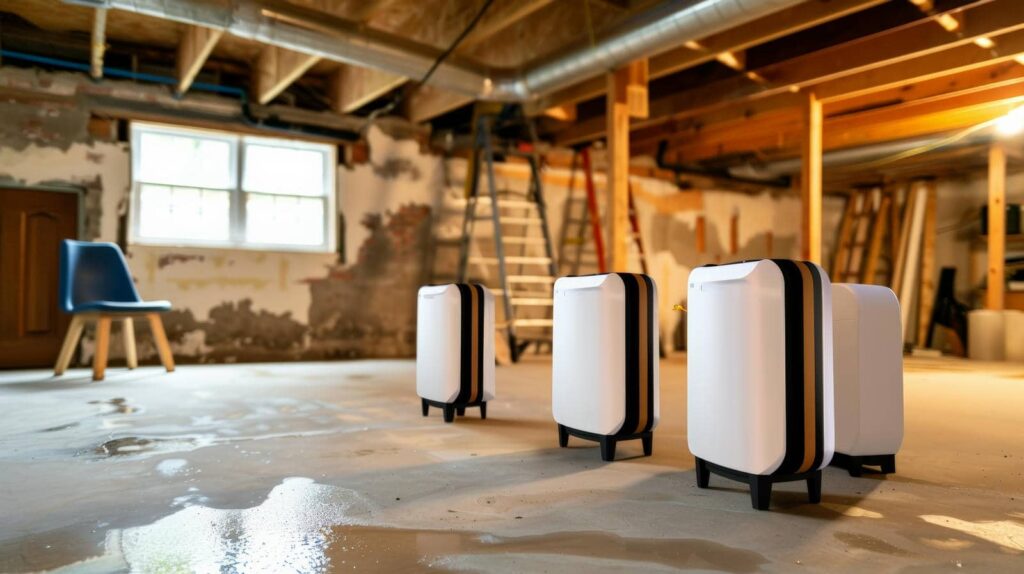
Dehumidifiers for Drying
After implementing effective air circulation techniques, integrating dehumidifiers into your drying strategy is essential for optimizing moisture removal.
Dehumidifiers enhance dehumidifier efficiency, allowing you to control moisture levels more effectively in your space. They work by drawing in humid air, extracting moisture, and releasing dry air, which accelerates the drying process.
Consider these key points when using dehumidifiers:
- Size Matters: Choose a dehumidifier that fits your area to maximize moisture control.
- Temperature Control: Running dehumidifiers in a warmer environment enhances their efficiency.
- Continuous Drain Option: Opt for models that offer continuous drainage to save time and effort.
Natural Drainage Solutions
To effectively manage excess water, you can utilize natural slopes in your landscape design.
By applying proper grading techniques, you can direct water flow away from structures and prevent pooling.
Implementing these natural drainage solutions enhances your property’s resilience and reduces the need for mechanical removal methods.
Utilizing Natural Slopes
When you harness the natural slopes of your landscape, you can greatly enhance drainage and minimize water accumulation during emergencies.
By effectively utilizing the contours of your natural terrain, you can improve runoff management and protect your property from flooding. Here are some strategies to contemplate:
- Identify natural slopes: Observe how water flows across your property to determine the best areas for drainage.
- Create channels: Implement shallow ditches or swales along the slopes to direct water away from structures.
- Maintain vegetation: Use native plants to stabilize soil and absorb excess moisture, further enhancing drainage.
Landscape Grading Techniques
Effective landscape grading techniques play an essential role in managing water flow and preventing flooding on your property. By implementing proper landscape leveling, you can create a natural slope that directs water away from your home.
Start by evaluating your land to identify low-lying areas that require elevation. Use soil to build up these areas, ensuring a gradual slope that promotes efficient drainage.
Incorporate drainage channels to capture and redirect excess water effectively. These channels can be lined with gravel or vegetation to enhance absorption.
Regularly maintain these channels to prevent blockages and ensure peak performance. By applying these techniques, you’ll protect your property and foster a sense of belonging within your community, contributing to overall environmental health.
Professional Water Damage Services
Professional water damage services are essential for swiftly addressing the aftermath of flooding or leaks in your property. When faced with such emergencies, it’s vital to enlist experts who can provide immediate assistance.
Their emergency response teams are trained to handle water removal efficiently, ensuring minimal disruption to your life.
A thorough damage assessment is conducted to identify affected areas and potential risks.
Here are a few key benefits of hiring professionals:
- Rapid Response: Experts arrive quickly, reducing the risk of long-term damage.
- Advanced Equipment: They utilize specialized tools to remove water and dry out spaces effectively.
- Comprehensive Restoration: Professionals handle water removal and restore your property to its pre-damage condition.
Frequently Asked Questions
How Can I Prevent Future Water Damage in My Home?
To prevent future water damage, install effective drainage systems and apply waterproofing techniques. Regularly inspect your home for leaks and maintain gutters, ensuring water flows away from your foundation and reducing potential risks.
What Types of Insurance Cover Water Damage Removal?
Imagine your home as a fortress. To defend it against water damage, you need robust insurance policies like homeowners’ or renters’ insurance, which often cover removal costs. Always check your policy details for specific coverage.
How Long Does It Take for Water Damage to Manifest?
Water damage can manifest within minutes to hours after exposure. You’ll need a thorough damage assessment to understand the water damage timeline, as factors like material type and temperature greatly influence the extent of the damage.
Can I Use Regular Household Fans for Air Circulation?
Yes, you can use regular household fans for air circulation. However, their effectiveness may be limited compared to specialized equipment. Position fans strategically to enhance airflow and reduce moisture, improving overall drying conditions.
What Are the Signs of Mold After Water Removal?
You’ll notice signs of mold through musty odors, discoloration on surfaces, or increased allergy symptoms. Mold identification is essential, as it poses significant health risks, including respiratory issues and weakened immune responses. Stay vigilant for early detection.
Review
In emergencies involving water damage, act swiftly and decisively. Assess the situation and ensure safety, turn off utilities and use pumps, utilize wet/dry vacuums and enhance air circulation, deploy dehumidifiers and explore natural drainage solutions, or seek professional help if needed. By following these steps, you’ll minimize damage and restore your property efficiently. With the right approach, you can tackle water removal effectively and protect your home from long-term issues.