
Many homeowners underestimate the importance of quick action after a flood. Following specific flooded home steps can markedly reduce damage and prevent mold growth. It’s essential to assess the situation carefully, ensuring your safety first. From turning off utilities to removing standing water, each step plays an important role in the recovery process. Understanding these steps can make all the difference in restoring your home effectively. What’s the first thing you should do?
Key Takeaways
- Assess flood damage and document affected areas for insurance claims before starting any cleanup efforts.
- Turn off electricity and gas to ensure a safe environment before removing any standing water.
- Use water extraction tools like wet/dry vacuums or submersible pumps to remove standing water efficiently.
- Dry out affected areas using dehumidifiers, fans, and proper ventilation to promote faster drying and prevent mold growth.
- Monitor humidity levels and check for mold growth regularly to maintain a safe living environment after cleanup.
Assess the Flood Damage
Before you start the cleanup process, it’s essential to assess the flood damage thoroughly.
Begin by documenting everything you see—take photos and notes of affected areas. This’ll help you when dealing with your flood insurance claim. Look for structural damage, mold growth, and damaged belongings. Identify which items can be salvaged and which need disposal.
Next, check the water level in your home.
If it’s safe, use a moisture meter to gauge how deeply water has penetrated walls and floors. This will guide your water restoration efforts.
Ensure Safety Precautions
While you’re enthusiastic to start the cleanup, ensuring safety precautions is crucial to protect yourself and others. First, gather your safety gear, including gloves, boots, and masks, to shield yourself from contaminants in the water. Floodwaters can harbor harmful substances, so don’t skip this step.
Next, have an emergency kit ready. This kit should include essentials like a flashlight, batteries, first aid supplies, and any necessary medications. You never know when you might need these items during the cleanup process.
Before you plunge in, assess the area for hazards like sharp objects or unstable structures. If you’re unsure about something, don’t hesitate to ask for help.
Working with friends or family makes the task easier and reinforces a sense of belonging and support. Remember, your safety is the top priority, so take these precautions seriously before tackling the mess ahead.
Turn Off Electricity and Gas
Turning off electricity and gas is an essential step before you start any cleanup in a flooded home. This ensures your safety and reduces the risk of fire hazards.
First, locate the main electrical panel and turn off the power to the entire house. If you’re unsure, don’t hesitate to ask a neighbor or friend for help. Remember, electrical safety is paramount during this process.
Next, find the gas shutoff valve, usually located near the gas meter. Turn it clockwise to stop the gas flow. If you smell gas or hear hissing noises, evacuate immediately and call your gas company.
These actions create a safer environment for you and anyone assisting with the cleanup. Once the power and gas are off, you can proceed with removing water and salvaging your belongings.
Safety first—you’re not alone in this; many have faced similar challenges and come through stronger.
Remove Standing Water
Once you’ve confirmed the electricity and gas are off, it’s time to tackle the standing water.
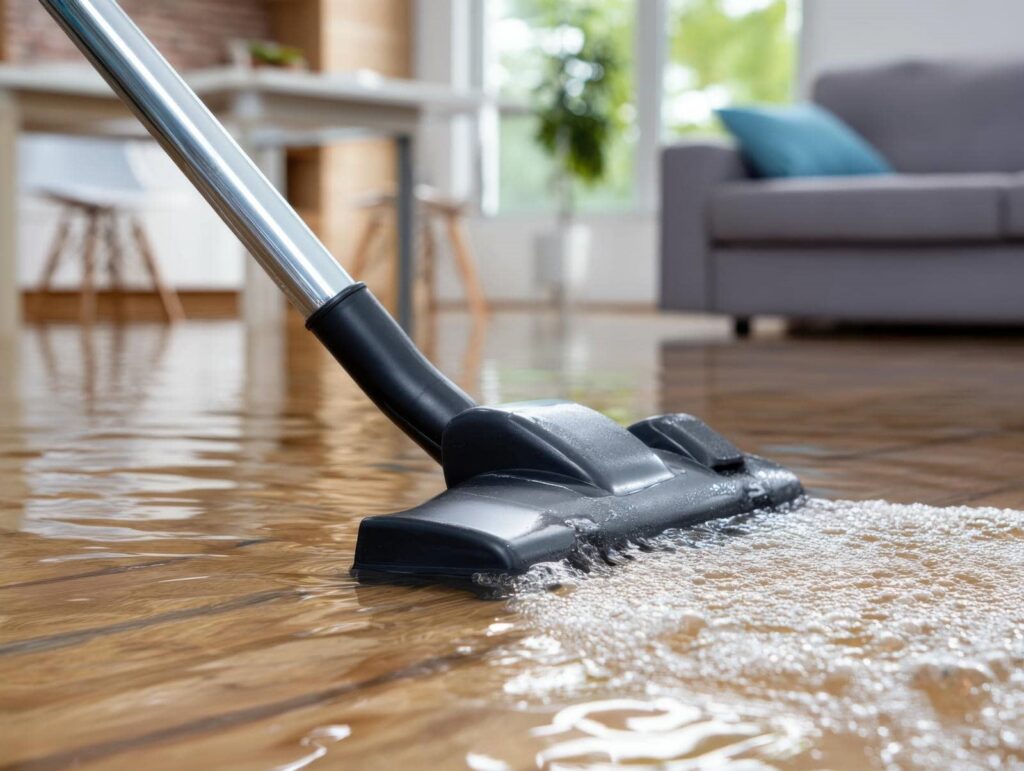
Begin by gathering your water extraction tools. A wet/dry vacuum is ideal for smaller amounts, while a submersible pump works well for larger areas. If you’re dealing with significant flooding, consider renting professional-grade equipment for efficient water extraction.
Start in the lowest areas of your home, directing the water toward a drain or outside. If you’re using a vacuum, empty it regularly to maintain efficiency. For safety, wear rubber boots and gloves throughout the process.
Once you’ve removed the bulk of the standing water, be sure to check for any hidden pockets of moisture that could lead to mold.
Dry Out the Affected Areas
Once you’ve removed standing water, it’s essential to assess the water damage in your home.
Use dehumidifiers effectively to pull moisture from the air, and promote air circulation by opening windows or using fans.
This combination will help you dry out the affected areas quickly and prevent further damage.
Assess Water Damage
After a flood, evaluating water damage is essential to effectively dry out affected areas and prevent further issues.
Start by inspecting your home thoroughly, checking for signs of water intrusion in walls, floors, and ceilings. Document the damage with photos for your flood insurance claim, ensuring you have a clear record.
If water extraction hasn’t been completed, address it immediately to minimize mold growth and structural damage. Focus on high-risk areas like basements and crawl spaces, as they often retain water.
Be aware of hidden pockets of moisture that can lead to more problems later. By appraising the damage promptly, you can take the right steps toward restoration and get your home back to normal as quickly as possible.
Use Dehumidifiers Effectively
Using dehumidifiers effectively is essential for drying out flooded areas in your home.
Start by placing your dehumidifier in the most affected rooms, ideally near sources of moisture. This strategic dehumidifier placement will optimize its efficiency.
Aim for ideal humidity levels around 30-60%, as this range promotes faster drying and prevents mold growth.
Run the dehumidifier continuously, checking the water collection tank regularly to ensure it’s functioning properly. If your home is large, consider using multiple units to cover more ground.
Don’t forget to keep doors and windows closed while the dehumidifier is running, as this helps maintain the ideal humidity level.
With these steps, you’ll create a healthier living space and safeguard your home from further damage.
Promote Air Circulation
Effective dehumidification alone won’t fully dry out your home; promoting air circulation is key to expediting the drying process.
Start by opening windows and doors to create natural airflow. Consider using fans to enhance airflow techniques, directing them toward damp areas to help moisture evaporate faster. You might also want to set up box fans in windows to draw in fresh air while pushing out humid air.
Implementing ventilation strategies, like using exhaust fans in bathrooms and kitchens, will further enhance circulation.
Remember, consistent airflow speeds up drying and prevents mold growth, fostering a healthier home environment.
Clean and Disinfect Surfaces
Once you’ve removed standing water, it’s crucial to clean and disinfect surfaces to prevent mold growth and contamination.
Start by using effective cleaning techniques, like scrubbing surfaces with a stiff brush to remove any dirt or debris. For hard surfaces, a mixture of water and a mild detergent works well.
After cleaning, it’s time to disinfect. Use disinfectant solutions that are EPA-approved for killing mold and bacteria. Apply these solutions generously to ensure complete coverage and follow the manufacturer’s instructions for contact time.
Don’t forget high-touch areas like doorknobs and light switches, where germs can linger. Allow surfaces to air dry, as moisture promotes mold growth.
By taking these steps, you create a safer environment and foster a sense of community by sharing your knowledge with others facing similar challenges.
Remove Damaged Materials
Start by evaluating the damage to your home after a flood. Look for materials that can’t be salvaged, like soaked drywall, insulation, and flooring. These items can harbor mold and bacteria, so it’s essential to remove them promptly.
Gather flood debris and separate it into piles for disposal.
Next, check your furniture and personal belongings. If they’ve absorbed too much water, you may need to discard them. For items you think can be salvaged, clean them thoroughly and dry them out as soon as possible.
Document everything you’re removing for insurance claims, as this can help you recoup some of your losses.
This process isn’t easy, but taking swift action will help restore your home and peace of mind.
Don’t hesitate to reach out for support from friends or local organizations; you’re not alone in this challenging time.
Use Dehumidifiers and Fans
As you begin to dry out your home, using dehumidifiers and fans can greatly speed up the process. Start with the dehumidifier settings; set them to high to extract as much moisture as possible from the air. Aim to keep the humidity levels below 60% for ideal drying.
Next, consider fan placement. Position fans in a way that encourages airflow throughout the space, directing them towards the dampest areas. This helps with drying and keeps air circulating, preventing musty odors.
If you have multiple fans, use them strategically by placing some on the floor and others elevated to reach different levels.
Make sure to run the dehumidifiers and fans continuously for at least 24 to 48 hours, checking periodically to adjust settings as needed. By harnessing these tools, you’ll create a more comfortable, welcoming environment as you work to restore your home.
Monitor for Mold Growth
While you’re drying out your home, it’s important to keep an eye out for mold growth. Mold can develop quickly in damp conditions, often within 24 to 48 hours, so vigilance is key.
Start by checking areas with high indoor humidity, such as bathrooms, kitchens, and basements. Use a hygrometer to monitor humidity levels; ideally, they should stay below 60%.
To aid in mold prevention, maintain proper ventilation by opening windows and using fans.
If you spot any mold, clean it immediately using a mixture of water and detergent or a specialized mold cleaner.
Don’t forget to inspect hidden spots, like under carpets and behind drywall, as mold loves to hide.
Restore and Repair the Home
Restoring and repairing your home after a flood requires prompt action to secure safety and prevent further damage.
Begin by evaluating the extent of the damage, and prioritize critical repairs to ensure your home is livable again. Utilize effective home restoration and repair techniques to tackle the situation systematically.
- Remove damaged materials: Tear out wet drywall, insulation, and flooring to prevent mold growth.
- Dry out your home: Use fans and dehumidifiers to eliminate moisture from walls and surfaces.
- Inspect for structural damage: Check your foundation, beams, and roof for any signs of weakness or instability.
Frequently Asked Questions
How Can I Prevent Future Flooding in My Home?
To prevent future flooding in your home, invest in effective drainage solutions and install sump pumps. Regularly maintain these systems to ensure they function properly during heavy rainfall, keeping your space safe and dry.
What Insurance Coverage Do I Need for Flood Damage?
You need flood insurance to protect against water damage. Check coverage options like building and personal property insurance. It’s crucial to understand your policy to ensure you’re adequately covered for potential flood risks.
Can I File a Claim for Temporary Housing Expenses?
Yes, you can file a claim for temporary housing expenses. Think of it like seeking shelter in a storm; you need a safe haven. Understand the claim process, and gather necessary documentation to support your request.
How Long Does It Take to Fully Restore a Flooded Home?
It usually takes several weeks to fully restore a flooded home, depending on the restoration timeline and drying process. Factors like damage extent and your home’s materials will influence how quickly everything gets back to normal.
What Professionals Should I Hire for Flood Restoration?
You should hire flood restoration specialists for thorough damage assessments and effective cleanup. Look for certified professionals who can handle water extraction, drying, mold prevention, and structural repairs to ensure your home’s safe restoration.
Review
To sum up, tackling water damage requires swift action and careful attention to detail. For instance, imagine a family returning home after a storm to find their basement flooded. By following these steps, they can quickly remove the water, dry out the space, and prevent mold growth, ultimately restoring their home. Don’t wait—act promptly to minimize damage and safeguard your living environment. Remember, thorough preparation and vigilance can make all the difference in recovery.