After flooding, many homes develop mold within just 48 hours. This rapid growth can severely impact respiratory health, especially for vulnerable groups. Understanding the risks associated with mold exposure is essential for safeguarding your well-being. From allergic reactions to chronic conditions, the consequences can be significant. What steps can you take to protect yourself and your family from these hidden dangers?
Key Takeaways
- Flooding can lead to mold growth, severely affecting respiratory health and exacerbating conditions like asthma.
- Allergic reactions may increase due to mold exposure and chemical contaminants in floodwaters.
- Prolonged mold exposure can cause chronic respiratory issues and worsen existing allergies or skin conditions.
- Vulnerable populations, such as the elderly and children, are at higher risk for mold-related infections.
- Regular health monitoring and inspections post-flooding are essential for early detection and intervention of mold-related health risks.
The Impact of Mold on Respiratory Health
When you’re exposed to mold after a flood, it can greatly affect your respiratory health. Understanding the mold lifecycle is essential; mold spores thrive in damp environments, quickly colonizing surfaces and releasing allergens into the air. This can severely compromise indoor air quality, making it difficult for you to breathe comfortably.
Even if you don’t notice visible mold, it can still exist unseen, affecting the quality of the air you inhale. Prolonged exposure can lead to increased respiratory issues, including chronic cough, wheezing, and even asthma exacerbations.
To safeguard your health, ensure proper ventilation and moisture control in your home. Regularly check for signs of mold growth and address any water damage promptly.
Creating a clean, dry environment enhances your indoor air quality and fosters a sense of safety and belonging in your home. Prioritizing these steps can greatly mitigate the respiratory risks associated with mold exposure.
Allergic Reactions and Sensitivities
After flooding, the risk of allergic reactions increases considerably due to mold exposure, which can trigger respiratory issues and other sensitivities.
Chemical contaminants present in floodwaters can also exacerbate these reactions, leading to heightened health concerns.
Additionally, rising pollen counts in the aftermath can further irritate individuals already susceptible to allergies.
Mold Exposure Risks
Mold exposure poses significant health risks, especially for individuals with preexisting allergies or sensitivities. When mold spores become airborne, they can trigger allergic reactions such as sneezing, itching, and respiratory issues. You mightn’t even realize you’re exposed until symptoms arise.
To protect yourself, implementing mold prevention strategies is essential. This includes keeping humidity levels low and ensuring proper ventilation in your home. Additionally, consider using mold testing methods to identify hidden issues.
Regular inspections can help you spot mold growth early, minimizing health risks. By staying informed and proactive, you can create a safer environment for yourself and your loved ones, fostering a sense of belonging in a healthy community.
Chemical Contaminants Impact
Chemical contaminants can pose serious health risks, particularly for those with allergies or sensitivities. After flooding, chemical exposure from toxic substances can trigger reactions you mightn’t have experienced before.
Common pollutants, such as pesticides, heavy metals, and industrial chemicals, can infiltrate your environment, increasing the likelihood of allergic responses. If you’re sensitive to these substances, you may notice symptoms like skin irritation, respiratory issues, or gastrointestinal distress.
It’s essential to monitor your surroundings and take proactive measures, such as wearing protective gear or using air purifiers, to reduce exposure.
Increased Pollen Counts
When flooding occurs, the disruption of natural habitats can lead to a surge in pollen counts, which may exacerbate allergic reactions and sensitivities for many individuals. Increased moisture creates ideal conditions for various pollen sources, such as grasses and weeds, to thrive.
As these plants proliferate, you might experience heightened symptoms, making effective allergy management essential. Staying informed about local pollen forecasts can help you prepare and minimize exposure.
Implementing strategies like keeping windows closed during high pollen days, using air purifiers, and regularly cleaning your living space can greatly reduce your allergy symptoms.
Long-Term Health Risks Associated With Mold Exposure
After flooding, mold can become a persistent issue in your environment, leading to various long-term health risks.
You might experience respiratory problems and allergies as a result of prolonged exposure, which can greatly impact your quality of life.
Additionally, mold can contribute to long-lasting skin conditions that require ongoing management.
Respiratory Issues and Allergies
Mold exposure can considerably impact your respiratory health, leading to long-term issues that may not surface until years after a flood.
When mold spores proliferate in damp environments, they can become significant allergy triggers, causing symptoms like sneezing, coughing, and wheezing. These irritations can escalate into chronic respiratory infections, especially for those with pre-existing conditions.
If you find yourself consistently struggling with respiratory issues post-flood, it’s essential to recognize the potential link to mold exposure.
Taking proactive measures to identify and eliminate mold can help protect your respiratory health.
Remember, you’re not alone in facing these challenges; awareness and action are fundamental for your well-being and that of your community.
Prioritize your health and seek solutions.
Long-Term Skin Conditions
Exposure to mold in the aftermath of flooding can lead to a range of long-term skin conditions that often go unnoticed until they become severe.
You might experience skin irritation, which can manifest as rashes, hives, or persistent itchiness. These dermatological conditions can stem from direct contact with mold spores or through airborne particles settling on your skin.
If left untreated, these issues can escalate, leading to chronic dermatitis or other serious skin problems. It’s essential to be vigilant about any changes in your skin and consult a healthcare professional if you notice unusual symptoms.
Mold-Related Infections and Vulnerable Populations
While flooding can lead to numerous health issues, mold-related infections pose a particularly high risk for vulnerable populations, including the elderly, young children, and individuals with compromised immune systems.
These at-risk demographics often lack the resilience to combat the effects of mold exposure, which can lead to respiratory problems and other serious infections. Implementing mold prevention strategies is vital in safeguarding these groups.
You should make certain that affected areas are dried quickly and thoroughly, as mold thrives in damp environments.
Regularly monitor indoor humidity levels and maintain proper ventilation. Additionally, consider using air purifiers equipped with HEPA filters to reduce airborne mold spores.
Educating yourself and your community about the dangers of mold and the importance of timely intervention fosters a sense of belonging and shared responsibility.
Identifying Mold Growth After Flooding
After flooding, recognizing the signs of mold growth is essential for maintaining a healthy living environment. You should begin by employing mold identification techniques that can help you spot potential issues early.
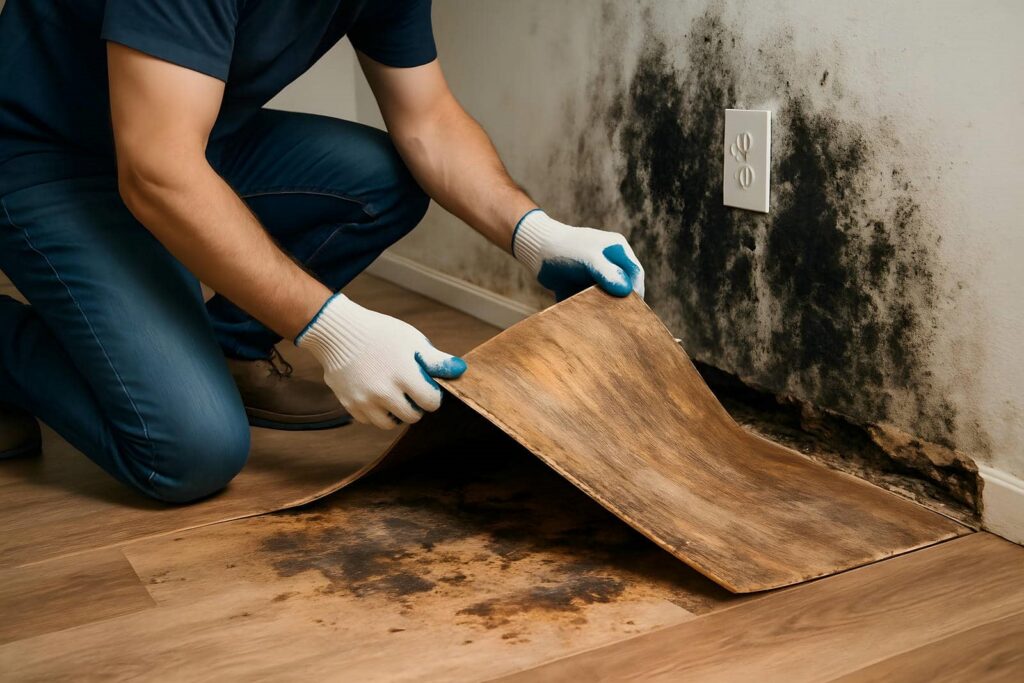
Look for visual mold indicators such as dark spots or fuzzy patches on walls, ceilings, and floors, particularly in areas that remained damp. Pay attention to musty odors, which often signal hidden mold development.
Additionally, check behind furniture and appliances, as these spots can harbor mold growth unnoticed. If you see condensation or water stains, they could indicate moisture problems conducive to mold proliferation.
Regular inspections, especially in the weeks following a flood, can help you identify and address mold before it spreads. Remember, early detection is key to ensuring a safe space for you and your loved ones.
Stay vigilant, and don’t hesitate to seek professional help if you suspect significant mold growth.
Preventative Measures to Limit Mold Growth
To effectively limit mold growth after a flood, it’s crucial to take immediate and proactive steps. Start by removing any standing water and drying out your home within 24-48 hours.
Use fans and dehumidifiers to enhance home ventilation, ensuring moisture levels drop below 60%. Remove soaked materials, such as carpets and drywall, as they can harbor mold spores.
Consider applying mold-resistant products to surfaces, which can be an effective mold prevention strategy. Regularly inspect areas prone to dampness, like basements and bathrooms, and maintain good home ventilation by keeping windows open whenever possible and using exhaust fans.
Developing a routine for checking humidity levels can also help you stay ahead of potential mold issues.
Safe Cleanup Practices for Mold Removal
Even with preventative measures in place, mold can still develop after a flood, making safe cleanup practices essential for your health and home.
Start by wearing protective gear, including gloves, masks, and goggles, to prevent inhalation or skin contact with mold spores. Use effective mold removal techniques like scrubbing surfaces with a mixture of water and detergent or a specialized mold cleaner.
Ascertain that you ventilate the area well to reduce moisture levels and promote drying.
When dealing with contaminated materials such as carpets or drywall, practice safe disposal. Seal these items in plastic bags before discarding them to minimize mold spore spread.
After cleaning, monitor the area for any regrowth, as moisture issues can lead to recurrence.
When to Seek Professional Help for Mold Issues
How can you tell when it’s time to call in professionals for mold issues? If you notice persistent mold growth that’s resistant to your cleaning efforts, it’s a clear sign to seek expert help.
Mold can spread quickly and pose serious health risks, so don’t underestimate the situation. Consider professional remediation if you see large patches of mold, or if it’s in hard-to-reach areas like behind walls or under flooring.
Additionally, if you experience musty odors or notice health symptoms in your household, mold testing can provide significant insights. Professionals can accurately assess the severity of the problem and offer safe, effective solutions.
They’ve the expertise and equipment needed to ensure thorough remediation, protecting your home and health. Remember, early intervention can prevent further damage and safeguard your family’s well-being.
Trusting the experts can help restore your space and give you peace of mind.
Monitoring Health Symptoms Post-Flooding
After addressing mold issues, it’s vital to monitor any health symptoms that may arise following a flood. Engaging in symptom tracking can help you identify patterns and changes in your health that could be related to flood-related exposures.
Pay close attention to respiratory issues, skin irritations, or gastrointestinal problems, as these can signal underlying health risks.
Regular health screenings are important during this period. They not only provide a professional assessment of your condition but also offer reassurance to you and your loved ones.
If you notice persistent or worsening symptoms, don’t hesitate to seek medical advice. Documenting your symptoms and any potential triggers can facilitate productive conversations with healthcare professionals.
Frequently Asked Questions
Can Pets Be Affected by Mold Exposure After Flooding?
Yes, pets can be affected by mold exposure after flooding. You might notice mold symptoms like sneezing or skin irritations in your pets, which can seriously impact their health. It’s crucial to monitor them closely.
What Are the Signs of Mold-Related Illnesses in Children?
You might notice mold symptoms like persistent coughing, sneezing, or skin rashes in your children. Watch for headaches or fatigue, too. These signs can seriously impact children’s health, so act quickly to ensure their well-being.
How Quickly Can Mold Start to Grow After a Flood?
Mold growth can start within 24 to 48 hours after a flood. In the flood aftermath, it’s essential to dry affected areas quickly to prevent health risks and further complications associated with mold exposure.
Are There Any Home Remedies to Remove Mold Effectively?
When tackling mold, think of it as a stubborn weed. You can use vinegar, baking soda, or tea tree oil as natural cleaning solutions. Combine these with mold prevention techniques to keep your home healthy and safe.
What Should I Do if I Experience Persistent Health Symptoms?
If you experience persistent health symptoms, start symptom tracking to note patterns. Then, seek medical consultation to discuss your findings. This proactive approach helps ensure you receive appropriate care and support from healthcare professionals.
Recap
Understanding the health risks after flooding is essential for protecting yourself and your loved ones. Research shows that homes affected by water damage develop mold within 48 hours. By recognizing mold growth early and taking preventative measures, you can greatly reduce health issues related to mold exposure. Remember, proactive steps like proper ventilation and moisture control can safeguard your indoor environment and help prevent long-term respiratory complications. Stay vigilant and prioritize your health.