
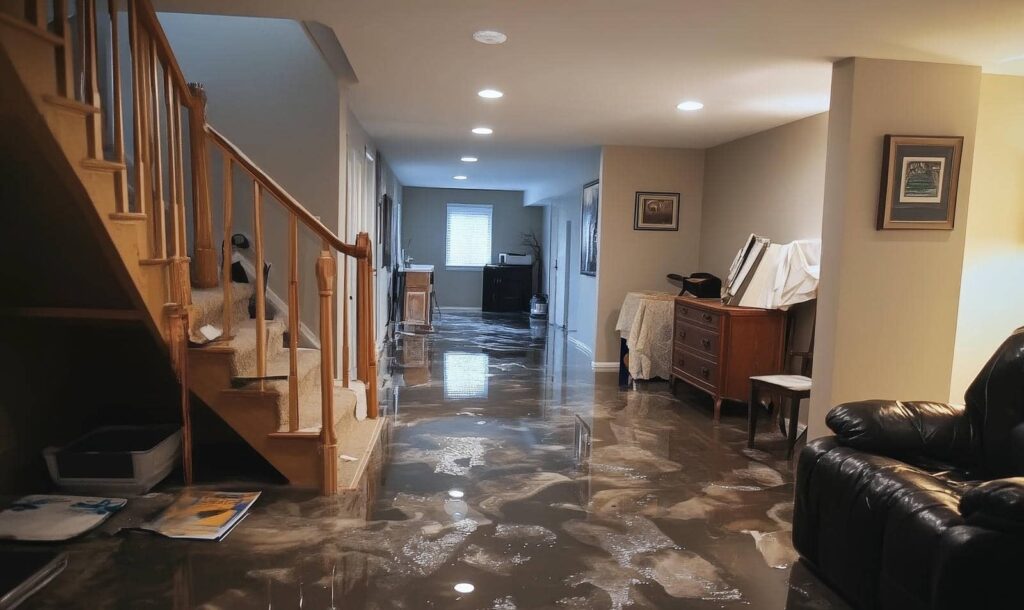
Imagine waking up to find your flooded basement submerged after a heavy storm. The water damage can be overwhelming, but knowing the vital actions for recovery can make the process manageable. First, you’ll need to assess the damage and ensure safety before entering the area. Understanding what steps to take next is essential to minimizing loss and preventing future issues. Let’s explore how to effectively tackle each phase of the recovery process.
Key Takeaways
- Assess the extent of water damage and ensure safety by checking for electrical hazards and structural integrity before entering the basement.
- Identify and stop the source of water infiltration by inspecting for cracks, gaps, and drainage issues around the property.
- Remove standing water efficiently using submersible pumps, sump pumps, or wet-dry vacuums for smaller amounts of water.
- Dry out the affected area by increasing air circulation, using dehumidifiers, and monitoring humidity levels to prevent mold growth.
- Evaluate and restore personal belongings, documenting items for insurance and cleaning thoroughly to salvage as much as possible.
Assessing the Extent of Water Damage
When you discover a flooded basement, the first step is to evaluate the extent of the water damage. Start by checking the water level; this helps you understand how deep the water is and what areas are most affected.
Look for items that might be salvageable and identify those that are beyond repair. Document the damage by taking photos, as this can be useful for insurance claims later.
While evaluating, be mindful of the potential hazards lurking in the water, such as electrical issues or contaminated materials.
Keep in mind that this process can feel overwhelming, but you’re not alone in facing it. By carefully assessing the situation, you’re taking control and making informed decisions about how to move forward.
Ensuring Safety Before Entering the Basement
Before you step into your flooded basement, it’s essential to prioritize safety.
Make sure to assess any electrical hazards, wear protective gear, and check the structural integrity of the area.
Taking these precautions can help prevent accidents and keep you safe during the recovery process.
Assess Electrical Hazards
Evaluating electrical hazards is essential for your safety before entering a flooded basement. Water and electricity don’t mix, so take a moment to assess the situation.
Before you step inside, check for downed power lines or visible damage to electrical outlets. If you can, perform a circuit inspection from a safe distance. Turn off the main power supply if it’s safe to do so.
Remember, electrical safety is your top priority. If you’re unsure about any aspect, it’s best to consult a professional electrician. You’re not alone in facing this challenge; many have navigated similar situations.
Wear Protective Gear
As you prepare to enter a flooded basement, wearing protective gear is essential to your safety.
You’ll want to put on waterproof boots to keep your feet dry and prevent slips. Don’t forget protective clothing, like gloves and a long-sleeve shirt, to shield your skin from contaminants.
A mask or respirator can help filter out harmful particles in the air, ensuring you breathe safely while you work. Safety equipment, such as goggles, will protect your eyes from debris that may be floating around.
Remember, taking these precautions safeguards your health and shows you care for yourself and those who might lend a hand.
Prioritize your safety and be ready to tackle the recovery process together.
Check Structural Integrity
Once you’ve donned your protective gear, it’s essential to assess the structural integrity of your basement.
Before you step in, verify you’re safe by conducting a thorough evaluation. Here’s what to check:
- Foundation assessment: Look for cracks or shifts in the walls.
- Load-bearing evaluation: Confirm that support beams are intact and secure.
- Water damage: Identify any signs of rotting or mold growth.
- Floor stability: Test for any weak spots that might give way.
- Electrical hazards: Verify wiring is undamaged and safe to approach.
Identifying and Stopping the Source of Water Infiltration
Identifying and stopping the source of water infiltration is vital to preventing future flooding in your basement. Start by inspecting both the interior and exterior of your home for any visible signs of moisture.
Look for cracks in walls, gaps around windows, or damaged gutters, as these can all serve as potential water sources.
Next, assess your yard’s grading; it should slope away from your foundation to facilitate proper drainage. If you discover any leaks, address them immediately to improve infiltration prevention.
Consider using waterproof sealants on walls and floors to block moisture entry. Regular maintenance of gutters and downspouts is essential, too; make sure they’re clear and directing water away from your home.
Removing Standing Water Efficiently
When your basement floods, acting quickly to remove standing water is essential to minimize damage and prevent mold growth.
You can use various water removal techniques to tackle this issue effectively. Here are some effective pump options to evaluate:
- Submersible Pumps: Ideal for deep water; they can remove large volumes quickly.
- Sump Pumps: Perfect for ongoing flooding situations; they automatically kick in when water rises.
- Wet-Dry Vacuums: Great for smaller amounts of water; they’re versatile and easy to use.
- Bailing by Hand: If power isn’t available, you can use buckets to remove water manually.
- Professional Water Removal Services: When in doubt, call the pros for efficient, safe removal.
Choosing the right method depends on the water level and your resources.
Don’t hesitate to reach out for help if you need it; you’re not alone in this!
Drying Out the Affected Area
Once you’ve removed the standing water, it’s essential to focus on drying out the area to prevent mold and further damage.
Increasing air circulation and using dehumidifiers effectively will help speed up the drying process.
Let’s explore these steps to ensure your basement returns to a safe, dry condition.
Remove Standing Water
Start by removing any standing water in your basement as quickly as possible. This is essential to prevent further damage and mold growth.
Use effective water extraction methods to tackle the situation. Here are some options to take into account:
- Sump Pump: If you have one, this is your best bet for large volumes of water.
- Wet/Dry Vacuum: Great for smaller amounts of standing water.
- Buckets: Manual but effective for limited water removal.
- Water Absorption Products: Think about using absorbent materials like sponges or towels.
- Professional Help: In severe cases, don’t hesitate to call in the experts.
Taking these steps will help you regain control of your space and start the recovery process together.
Increase Air Circulation
To effectively dry out your basement, increasing air circulation is essential in preventing mold and mildew growth.
Start by opening windows and doors to promote natural airflow. If the weather isn’t cooperating, consider using fans or air movers to push out the damp air and draw in fresh air.
Utilize ventilation techniques like creating cross-ventilation by placing fans in opposite corners. This method helps circulate the air more efficiently, speeding up the drying process.
Remember, the sooner you increase airflow, the better your chances of avoiding long-term damage.
By taking these steps, you can create a healthier environment and reclaim your space.
You’re not alone in this; taking action now makes a difference for you and your home.
Use Dehumidifiers Effectively
How can you effectively use dehumidifiers to dry out your flooded basement? Proper dehumidifier placement is essential to lower humidity levels and speed up the drying process. Here’s how to make the most of your dehumidifiers:
- Choose the right size: Confirm your unit can handle the volume of your basement.
- Position strategically: Place dehumidifiers in the center of the room for ideal airflow.
- Seal off areas: Close doors and windows to prevent outside moisture from entering.
- Monitor humidity: Use a hygrometer to keep track of humidity levels, aiming for below 60%.
- Run continuously: Keep the dehumidifier running until the space feels dry to the touch.
Inspecting for Structural Damage
Once you’ve dealt with the immediate aftermath of a flooded basement, it’s essential to inspect for structural damage to ensure your home remains safe.
Start by examining your foundation for cracks—these can indicate significant issues. Even small cracks may allow moisture to seep in, leading to further complications.
Next, pay close attention to load-bearing walls. These walls support your home’s structure, and any signs of warping or shifting could mean trouble.
Look for any unusual bulges or gaps around doors and windows, as they might suggest instability.
If you notice any concerning signs, don’t hesitate to reach out to a professional for a thorough evaluation.
Addressing these issues promptly can prevent more extensive damage down the line and help you feel secure in your space once again.
Your home deserves to be a safe haven, and taking these steps is essential for ensuring its integrity.
Evaluating and Restoring Personal Belongings
After ensuring your home’s structure is secure, it’s time to assess the state of your personal belongings. This can be an emotional process, but salvaging items is essential for your recovery.
Start by organizing belongings to determine what can be saved and what needs to go.
Consider these steps:
- Document everything: Take photos for insurance claims.
- Sort items: Categorize into keep, discard, and donate.
- Clean and dry: Rinse off mud and allow items to dry thoroughly.
- Check for mold: Inspect for signs, especially in porous materials.
- Store wisely: Use airtight containers for items you’re salvaging.
Implementing Preventive Measures for Future Flooding
To prevent future flooding, it’s vital to take proactive measures that protect your home and belongings. Start by installing flood barriers around your property. These barriers can redirect water away from your foundation, greatly reducing the risk of flooding.
Additionally, consider investing in a reliable sump pump. This device will help remove excess water from your basement, especially during heavy rainfall or rapid snowmelt.
Regular maintenance is important; check your sump pump’s functionality and clean the drain lines frequently to ensure peak performance. You might also want to inspect your gutters and downspouts, ensuring they’re clear and directing water away from your home.
Lastly, evaluate the grading around your property. Proper grading helps divert water away from your foundation, offering an extra layer of protection.
Taking these steps safeguards your home and gives you peace of mind, knowing you’ve done your best to prevent future flooding.
Frequently Asked Questions
How Long Does It Typically Take to Recover From a Flooded Basement?
Typically, recovery from a flooded basement takes one to two weeks, depending on the severity. You’ll find the restoration process involves drying, cleaning, and repairing, so patience and careful planning make all the difference.
Should I Hire a Professional or Handle the Cleanup Myself?
Imagine steering through a stormy sea; you can brave the waves alone or enlist a skilled captain. Weigh the cleanup options and cost comparison—hiring pros often saves time and ensures thorough recovery. You deserve peace of mind.
What Health Risks Are Associated With Flooded Basements?
Flooded basements pose significant health risks, like mold growth and water contamination. You might face respiratory issues, allergic reactions, or infections. It’s essential to address these hazards quickly to protect your well-being and that of your loved ones.
Can I Claim Flood Damage on My Homeowners Insurance?
Flood damage claims depend on your flood insurance policy. Check your coverage limits carefully; some policies exclude certain damages. You deserve support, so review your options and connect with your insurer for clarity and assistance.
What Types of Dehumidifiers Are Best for Basement Drying?
For basement drying, desiccant dehumidifiers excel in low temperatures, while refrigerant dehumidifiers work well in warmer conditions. Choose based on your basement’s climate to effectively reduce moisture and promote a healthier environment.
Conclusion
As you navigate the aftermath of a flooded basement, think of yourself as a gardener tending to a storm-damaged garden. You’re not just clearing away debris; you’re nurturing the roots of your home’s safety and comfort. By taking these essential recovery steps, you’re planting seeds for a stronger future, ensuring that your space flourishes again. With diligence and care, you can transform this setback into an opportunity to safeguard against future storms, making your home resilient.