
When a water leak hits at any hour, you need to act fast to limit damage and cut cleanup time. You shut off the source, remove standing water, and start drying the area before moisture spreads into walls or flooring. The right steps can protect your property and reduce mold risk, but hidden water often creates problems you won’t spot right away.
Key Takeaways
- Shut off the water at the fixture or main valve immediately to stop the leak safely.
- Remove standing water fast with a wet/dry vacuum, towels, and mops.
- Protect floors, walls, and belongings by moving items and covering wet areas.
- Dry the space thoroughly with fans, dehumidifiers, and open windows if conditions allow.
- Call 24/7 water damage specialists if moisture persists, sewage is involved, or multiple rooms are affected.
Stop the Leak and Shut Off Water
If you can do so safely, stop the leak at its source and shut off the water supply immediately. Close the fixture valve first; if that doesn’t stop flow, use the main shutoff. Check the meter or visible piping to confirm the water’s off.
If you can’t locate the source, focus on leak detection by tracing damp areas, dripping sounds, or failed fittings. Call emergency plumbing support if a burst pipe, hidden leak, or inaccessible valve puts you at risk.
Keep clear notes on where you found moisture so you can brief your team or technician fast. You’re not handling this alone—steady action helps protect the space and keeps the cleanup manageable.
Avoid turning fixtures back on until repairs are complete and the system’s pressure is verified.
Remove Standing Water Fast
You need to remove standing water immediately to limit damage and mold growth.
Use a wet/dry vacuum for larger pools, then mop the area and dry remaining moisture with clean towels.
Keep working until the floor and nearby surfaces feel dry to the touch.
Use Wet/Dry Vacuum
A wet/dry vacuum can pull out standing water quickly and reduce the time moisture has to soak into flooring, subflooring, and drywall. You’ll get the best wet/dry vacuum benefits when you move in steady passes and empty the tank before it overfills.
Keep the hose sealed tightly so suction stays strong and water doesn’t splash back. Check the filter and cord before each use; solid vacuum maintenance helps you avoid downtime when you need speed.
Use the right attachment for the surface so you can work efficiently in tight spaces and along baseboards. If your team is restoring a leak together, coordinate who vacuums where to cut confusion and keep the cleanup moving.
Mop And Towel Dry
Swift mopping and towel drying removes leftover standing water that a wet/dry vacuum can’t reach, especially along edges, corners, and under fixtures.
You should start with clean, absorbent towels and a microfiber mop head for better pickup. Use mop techniques that push water toward a drain or open area, then wring often so you’re not spreading moisture back across the floor.
Press towels into seams, baseboards, and cabinet toe kicks to pull out hidden water. Choose towel materials that stay strong when saturated, like cotton or microfiber.
Swap damp towels fast and keep a dry stack ready. Work in small sections so you stay efficient and your team feels confident.
Finish by checking for slick spots and repeat until the surface feels dry.
Protect Floors, Walls, and Belongings
Cover floors with plastic sheeting, towels, or a waterproof barrier to keep moisture from spreading and causing warping or staining.
Move furniture, electronics, and other valuables out of the wet zone, and elevate anything you can’t remove.
For walls, remove damp baseboards or drywall only when needed, and keep air moving so hidden moisture doesn’t settle in.
Floor Protection Methods
Start by isolating the wet area with plastic sheeting, drop cloths, or waterproof mats so you can protect flooring, baseboards, walls, and nearby belongings from further damage.
Next, remove loose floor coverings and lift rugs, runners, or mats if they’re damp. Place moisture barriers under furniture legs and traffic paths to keep water from spreading into subfloor seams. Use weighted edges or painter’s tape to hold coverings in place without trapping runoff.
If you can, create a dry buffer zone around the leak and move items onto elevated blocks. Check the floor every few minutes for seepage, curling, or soft spots.
Replace saturated coverings right away, and keep the area ventilated so your crew can work safely and together.
Wall And Item Safety
After you’ve protected the floor, focus on the walls and belongings that water can reach next. Move furniture, rugs, and electronics away from wet zones, and lift items onto dry blocks if you can’t relocate them.
Check baseboards, drywall, and trim for swelling, staining, or soft spots. Use moisture detection tools to map hidden spread behind surfaces and inside wall insulation, because trapped water can weaken structure fast.
Open windows and run fans to dry air, but don’t blast damp paper, art, or textiles directly. Remove soaked boxes, books, and cushions early to reduce mold risk.
Label damaged items and separate salvageable pieces from losses. This keeps your space safer and helps you and your household stay organized during cleanup.
Dry the Area Before Mold Grows
Once the standing water is gone, dry the area quickly to stop mold from taking hold. You’re protecting your space and the people in it, so focus on mold prevention and moisture control right away.
Set up fans to move air across wet surfaces, and use a dehumidifier to pull humidity down fast. Open windows if outdoor air is dry. Keep air moving under furniture and along baseboards. Check hidden spots often so dampness doesn’t linger.
- Run fans continuously.
- Empty dehumidifier tanks promptly.
- Remove soaked rugs or pads.
- Measure humidity until it stays low.
Drying should continue until everything feels fully dry to the touch. If moisture remains, mold can start within 24 to 48 hours, so stay on it.
Clean Water-Damaged Surfaces
Use a mild cleaner and clean all water-damaged surfaces before stains and residue set in. Wipe hard surfaces with a microfiber cloth, then rinse and dry them fully.
Use approved disinfectant on nonporous areas for mold prevention, and follow the label’s contact time. For porous materials, apply a careful surface treatment only if the item can be restored safely.
Scrub grout, trim, counters, and baseboards with steady pressure to lift film and prevent odor. Wear gloves and eye protection so you stay safe while you work.
If you’re part of a cleanup crew, keep the same method on every affected surface so everyone gets consistent results.
Finish by checking for stickiness, discoloration, or residue, then repeat cleaning where needed.
Find Hidden Moisture in Walls and Carpets
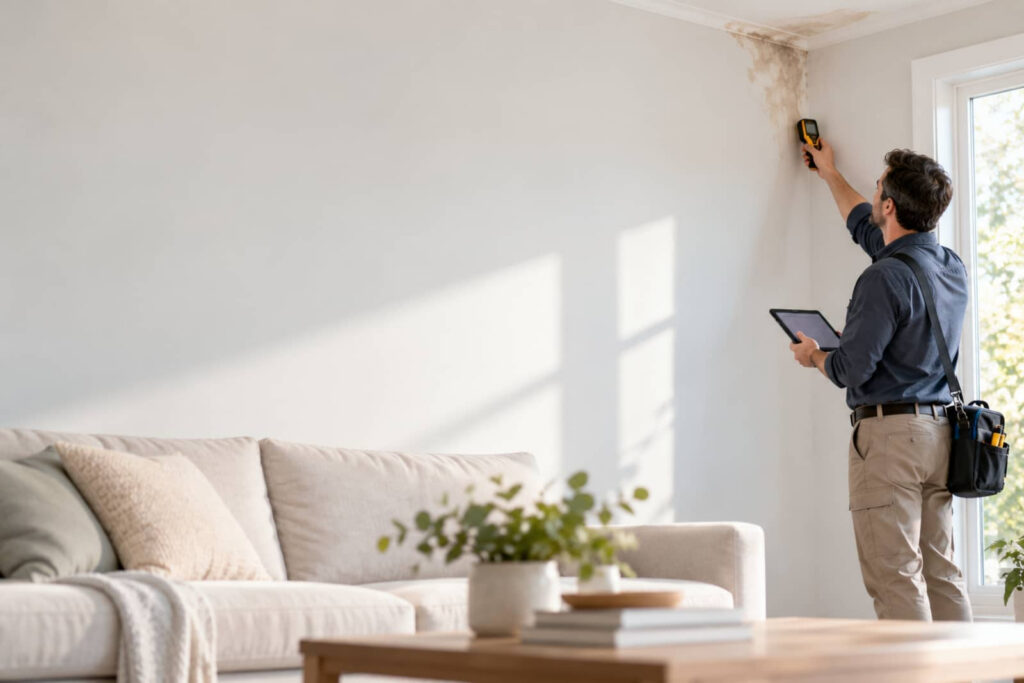
Even when surfaces look clean and dry, moisture can stay trapped inside walls, trim, padding, and carpet backing. You need moisture detection tools to find hidden sources before they spread.
Start with a meter and check baseboards, wall bottoms, and room edges. Then lift a corner of carpet and feel the pad for dampness. Watch for cool spots, staining, or soft drywall.
Use this quick checklist:
- Probe suspect wall sections.
- Check carpet seams and corners.
- Compare readings in dry areas.
- Mark every wet spot for drying.
If your readings stay elevated, keep monitoring until levels drop. You’re part of a smart cleanup routine when you catch hidden moisture early and protect the space.
When to Call Water Damage Specialists
Call water damage specialists when the leak has soaked insulation, reached multiple rooms, or left drywall, flooring, or structural materials compromised.
You’ll need trained help when moisture keeps returning after drying, odors persist, or you see staining, swelling, or mold risk.
A specialist can perform a water damage assessment, map hidden spread, and use meters and thermal imaging to verify what your cleanup missed.
They’ll also help you document losses for insurance claims, which can speed approval and reduce disputes.
If the source involves sewage, a burst line, or structural sagging, don’t wait.
Call right away so your crew can stabilize the site, protect your home, and help your household recover with less stress and fewer surprises.
Frequently Asked Questions
How Do I Document Water Damage for Insurance Claims?
Photograph every affected area, list damaged items, note dates, save receipts, and record moisture readings. You’ll strengthen the claim process by organizing a clear damage assessment, then share copies with your insurer promptly.
What Personal Safety Gear Should I Wear During Cleanup?
Wear protective gloves, waterproof boots, safety glasses, and a respirator if mold’s present. You’ll also want long sleeves and pants to reduce skin contact. Stay cautious, and you’ll protect yourself while you clean efficiently.
Can I Keep Using Electricity After a Leak?
No, you shouldn’t keep using electricity after a leak until you verify electrical safety and complete leak detection. Shut off power to affected areas, avoid wet outlets, and call a licensed electrician if you’re unsure.
How Long Does Water Damage Restoration Usually Take?
You’ll usually wait 3–7 days for drying, but full restoration timeline can take 1–4 weeks, depending on damage assessment, materials, and mold risk. You’ll feel informed when pros document progress and keep you included.
When Should I Replace Soaked Drywall Instead of Drying It?
You should replace soaked drywall when it’s sagging, crumbling, moldy, or stayed wet over 24 hours; drying techniques won’t restore it. Cutting it out fast supports mold prevention and protects your home.
Recap
When you stop the leak fast, you protect your home from chaos. What starts as dripping water can become soaked floors, swollen walls, and mold if you wait. Shut off the supply, remove standing water, and dry everything thoroughly. Clean damaged surfaces and check hidden moisture before it spreads. If the leak won’t quit or the damage is severe, call water damage specialists. Quick action now saves you from costly repairs later.