
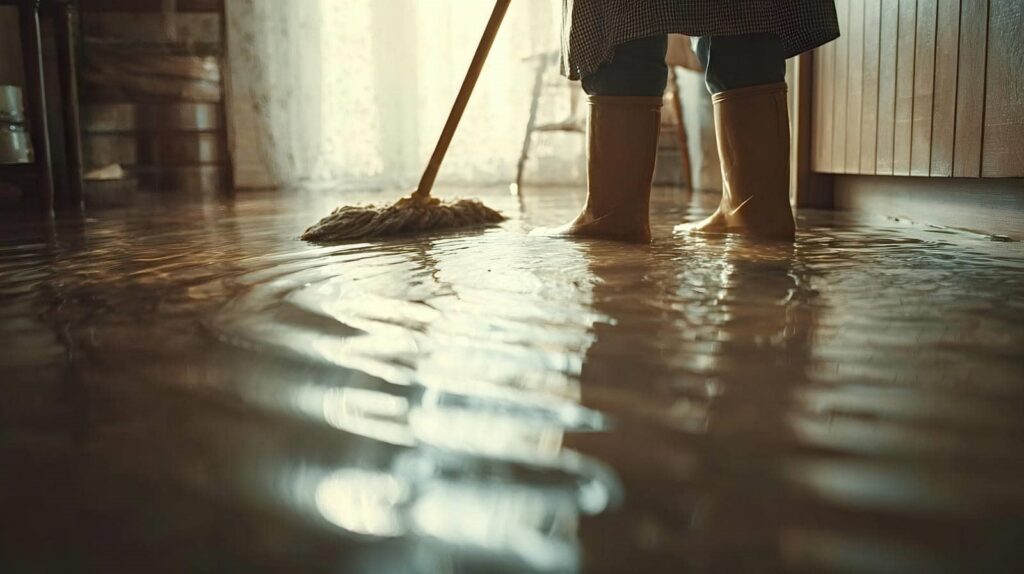
When water hits your home, you need to act fast to limit damage and keep cleanup manageable. You’ll want to stop the source, protect your belongings, and remove standing water before it spreads deeper into walls and flooring. Drying, mold checks, and the right emergency help all matter, but the first few steps usually decide how much you’ll save. The next moves can make all the difference.
Key Takeaways
- Act immediately to stop moisture spread, document damage, and protect salvageable items.
- Shut off the water source as soon as possible to prevent more flooding.
- Turn off electricity in affected areas if water is near outlets or wiring.
- Move furniture, valuables, and wet textiles to dry areas and elevate items.
- Remove standing water quickly, then dry with fans and dehumidifiers to prevent mold.
Act Fast After Water Damage Cleanup
The sooner you act after water damage cleanup, the less chance moisture has to spread, soak deeper into materials, and trigger mold growth.
You need an emergency response mindset: document damage, protect intact items, and start drying immediately. Use fans, dehumidifiers, and open pathways for airflow to reduce moisture levels fast.
Remove wet textiles and contents you can safely move, then separate salvageable materials from items that need disposal.
Keep receipts, photos, and notes for insurance claims, because clear records speed review and reduce disputes.
You’re not handling this alone; a quick, organized response puts you back in control and helps your home recover with less structural risk.
Stop the Water Source First
First, locate the leak or source of water so you can stop further damage at the origin.
Shut off the nearest valve or the main water supply, and if water is near outlets or equipment, cut power to avoid electrical hazards.
Locate The Leak
Before you clean up anything, trace the leak to its source and shut off the water immediately.
Check ceilings, walls, cabinets, and flooring for active drips, staining, swelling, or sound changes. Use leak detection methods like visual checks, moisture readings, and a flashlight to pinpoint hidden flow.
A careful plumbing inspection helps you confirm whether the problem comes from a supply line, drain, appliance, or fixture connection. Follow the wet trail back to the origin, and document what you see so your team can act fast together.
If the leak is behind a wall or under flooring, mark the area and limit traffic. The faster you locate the source, the less water enters the structure and the easier cleanup becomes for everyone involved.
Shut Off Valves
Turn off the closest shutoff valve as soon as you confirm the leak source, then close the main water supply if you can’t isolate it quickly.
Know your valve types: a quarter-turn ball valve stops flow fast, while a gate valve may need several rotations. If you’re part of a home team, label each shutoff so everyone can move fast under pressure.
Check the handle position after closing; it should align with the pipe on ball valves. If water still moves, don’t force the valve—use the main supply.
Add maintenance tips to your routine: test valves twice a year, keep them accessible, and replace stiff or corroded parts.
Fast action here limits spread, protects your space, and helps your cleanup crew work with you.
Stop Electrical Hazards
Once you’ve stopped the water source, cut power to any affected area if water has reached outlets, appliances, or wiring. You’re protecting your team and your home through electrical safety and hazard prevention.
Use the main breaker, not switches near wet surfaces, and don’t stand in pooled water while you work. If you smell burning, hear buzzing, or see sparking, back away and call a licensed electrician right away. Keep everyone out until you confirm the area is dry and safe.
- Shut off circuit breakers before entering wet rooms.
- Unplug devices only when your hands and floor are dry.
- Mark damaged cords, outlets, and panels for inspection.
If you’re unsure, treat every wet circuit as live. That caution helps your crew move fast without risking shock, secondary damage, or delays during cleanup.
Protect Furniture And Belongings
Move furniture and valuables out of the wet area as soon as you can to reduce staining, swelling, and mold growth.
Lift wood, metal, and upholstered pieces onto blocks for furniture elevation, and keep them away from damp floors and walls. Use protective coverings such as clean plastic sheeting, moving blankets, or breathable covers to shield items from splashes and airborne debris.
Remove cushions, rugs, books, electronics, and family keepsakes, then sort them into dry, secure spaces where your household can stay organized. If an item feels heavy or unstable, ask someone you trust to help so you don’t cause more damage.
Work methodically, label boxes, and protect surfaces before they warp, rust, or stain.
Start Water Extraction Right Away
Now that your furniture and belongings are out of the way, start removing standing water immediately to limit absorption into flooring, baseboards, and subfloors.
Use your emergency supplies first, then bring in extraction equipment that matches the water depth and room size. You’ll move faster if you work methodically and keep the path clear.
- Squeegee water toward a drain or wet vac intake.
- Empty and reset collection tanks before they overflow.
- Check corners, closets, and under cabinets for hidden pooling.
Stay focused on one zone at a time so your team feels organized and in control.
If the water source is still active, shut it off before you continue. Fast extraction reduces structural stress and gives everyone a better starting point for the rest of cleanup.
Dry Walls, Floors, And Indoor Air
After standing water is gone, dry the walls, floors, and indoor air as quickly as possible to stop secondary damage and mold growth.
Open windows if weather allows, and run fans to boost air circulation through every affected room. Use dehumidifiers to pull moisture from the air and support moisture control while materials dry.
Remove baseboards, lift wet carpet edges, and expose wall cavities if you can do it safely. Place fans to move air across surfaces, not directly at one spot.
Check hidden areas under cabinets, behind furniture, and along trim. Keep HVAC off until ductwork is dry, unless a pro advises otherwise.
You’ll protect your space, speed recovery, and help your home feel like yours again.
Check For Mold Growth After Drying
Once surfaces are dry, inspect every affected area for mold growth, especially on drywall, trim, insulation, and under flooring where moisture may have lingered.
You’ll want to use a bright light and check for discoloration, musty odor, or fuzzy patches. If you spot anything suspicious, isolate the area and record it during your post cleanup inspection.
- Lift baseboards and review hidden seams.
- Measure humidity to confirm conditions stay below 60%.
- Remove porous materials that show staining or softening.
These mold prevention strategies help you protect your home and stay confident in the cleanup process.
Keep monitoring for several days, because mold can appear after drying if moisture remains in cavities or joints.
Call A 24-Hour Water Damage Cleanup Service
When water damage spreads beyond a small, manageable area, call a 24-hour water damage cleanup service right away so they can start extraction, drying, and structural assessment without delay.
You’ll get emergency response from trained crews who know how to limit further loss and protect your home’s structure. They’ll bring commercial pumps, air movers, dehumidifiers, and moisture meters to map hidden saturation and speed drying.
Ask for professional assistance as soon as you notice warped flooring, wet insulation, or ceiling staining. Fast action helps you stay ahead of mold, corrosion, and electrical hazards.
With the right team, you’re not handling this alone; you’re joining a coordinated recovery process that gets your space safe, stable, and ready for repair.
Frequently Asked Questions
How Do I Know if Water Damage Reached Hidden Areas?
You know it reached hidden areas when you spot warped trim, musty odors, peeling paint, or soft drywall; use moisture detection tools to find hidden leaks behind walls, under floors, and inside ceilings quickly.
Can I Safely Use Household Fans for Faster Drying?
Yes, you can use household fans, but you’ll get limited fan effectiveness if moisture hides in walls or flooring. Combine fans with drying techniques like dehumidifiers, airflow gaps, and frequent inspections to avoid trapped dampness.
What Should I Do if Electronics Got Wet?
If electronics got wet, you should unplug them, remove batteries, and keep them off until a technician checks them. Prioritize electronics safety and water damage prevention; you’ll protect your gear and your community’s shared resources.
How Long Does Water Damage Cleanup Usually Take?
A soaked basement like yours usually takes 3–7 days; severe cases need weeks. Your cleanup timeline depends on drying techniques, material type, and extent. You’ll fit in with faster recovery by acting immediately.
Will My Insurance Cover Emergency Water Damage Cleanup?
Usually, yes—if your insurance policies cover sudden water damage, emergency services may be reimbursed. Check coverage limits, document damage, and start the claim process quickly so you’ll stay protected and supported.
Recap
Act fast after water damage, and you’ll limit repairs and reduce mold risk. First, stop the source, then protect your furniture and belongings. Extract standing water right away, and dry walls, floors, and indoor air with fans and dehumidifiers. Keep humidity below 60% and check for mold after drying. If the damage is severe, call a 24-hour cleanup service. Quick action is the anchor that keeps your property from sinking further.