
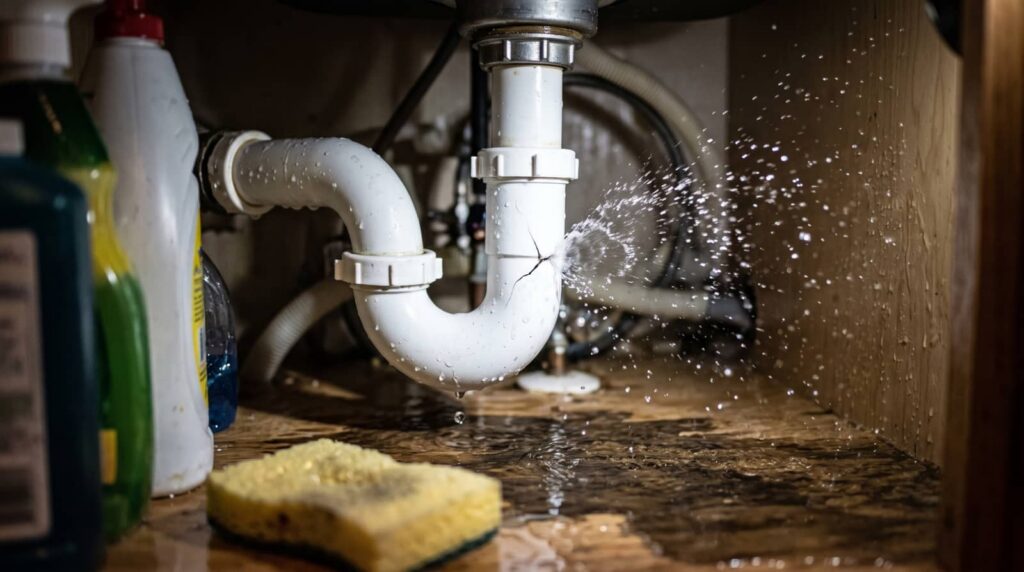
When a pipe bursts, you need to act fast: shut off the main water supply, cut power to wet areas, and move anything valuable out of harm’s way. Then start drying surfaces and call a cleanup team before moisture spreads behind walls or under flooring. The first few steps can limit the damage, but the real risk often hides out of sight, where problems can keep growing.
Key Takeaways
- Shut off the main water supply and electricity in affected areas to stop flooding and prevent electrical hazards.
- Open faucets and use temporary patches or clamps to slow the leak until repairs begin.
- Move furniture, rugs, and electronics away from the water immediately to protect belongings and surfaces.
- Call a water cleanup team quickly to limit damage, document losses, and reduce mold risk.
- Dry the area thoroughly and repair the pipe, then check for leaks before restoring normal use.
Stop the Burst Pipe and Shut Off Power
First, stop the water at its source by shutting off the main supply valve. Then turn off power to any affected areas if water is near outlets, appliances, or electrical panels. Move quickly, but stay calm; you’re handling a common emergency, and this step protects your home and your crew.
Open nearby faucets to relieve pressure in the line. If you can safely reach the damaged section, wrap it with a temporary clamp, rubber patch, or tape to slow the leak until pipe repair starts.
Check the meter to confirm water shutoff worked. If the valve won’t close, call your utility or a plumber now.
Keep clear of standing water near electricity, and don’t restore power until a qualified pro confirms the area is safe.
Protect Floors, Walls, and Belongings
Move furniture, rugs, and electronics out of the wet area right away to limit water damage.
Wipe and dry floors, baseboards, and walls as soon as you can, since standing moisture can soak into materials fast.
Keep moving items to a dry space until you’ve cleared the area and can inspect for hidden dampness.
Move Belongings Quickly
Swiftly clear the area around the burst pipe so water can’t soak into floors, drywall, or furniture. Move rugs, boxes, electronics, and decor first, then shift larger items with careful furniture relocation.
Keep pathways open so you can work fast and avoid extra damage. If something feels too heavy, get help right away; you’ll protect both your back and your belongings.
Place valuables on dry counters, shelves, or upper floors for valuable protection. Lift items instead of dragging them to prevent scratching and spreading moisture across the room.
Group related items together so you can return them later without confusion. Your goal is to create a safe, organized space that helps you respond quickly and keeps your home’s shared spaces intact.
Dry Surfaces Immediately
Blot and dry wet surfaces as soon as possible to slow water absorption and limit damage. Start with towels, mops, and a wet-dry vacuum to pull water from floors, baseboards, and furniture.
Keep air moving with fans and open windows if conditions allow. Lift rugs and cushions so both sides can dry evenly.
For drywall and trim, wipe all visible moisture, then watch for swelling, staining, or soft spots. Use surface drying on every affected area before mold can develop.
If you can, check hidden pockets behind furniture and under cabinets. A careful moisture assessment helps you spot lingering dampness and decide what needs more drying.
Work methodically, and you’ll protect your space, keep repairs manageable, and stay in control together.
Call a Water Cleanup Team Immediately
Call a water cleanup team immediately so they can respond fast and limit ongoing water damage.
Their emergency response time matters because every minute increases saturation, mold risk, and structural damage.
They’ll bring professional drying equipment to remove hidden moisture and start controlled drying right away.
Emergency Response Time
As soon as you spot a burst pipe, contact a water cleanup team right away so they can start extraction, drying, and damage control before moisture spreads.
Fast response matters because standing water soaks subfloors, wicks into wall cavities, and raises repair costs. Keep your emergency contact list easy to reach, and follow your response plan without delay.
When you call, give the crew your address, leak source, affected rooms, and whether power is off in the area. That helps them arrive prepared with pumps, air movers, and moisture meters.
You’re not handling this alone; trained pros work with you to stabilize the scene. Every minute counts, so quick coordination protects your home and helps your household recover faster.
Stop Further Water Damage
Act fast to stop the water from spreading by getting a water cleanup team on site immediately. You’ll protect your home faster when trained technicians arrive with water detection tools and map hidden moisture before it reaches walls, floors, and shared spaces.
They can isolate the source, document losses, and help you keep the process organized for insurance claims.
- Call, text, or dispatch a crew now.
- Move valuables only if it’s safe.
- Keep entry paths clear for quick access.
When you act with your team, you reduce secondary damage and avoid delays. A prompt response also gives you cleaner records, stronger claim support, and less stress.
You’re not handling this alone—lean on professionals who know how to stop spread, verify affected areas, and guide your next step.
Professional Drying Equipment
A water cleanup team can bring in professional drying equipment right away to control moisture before it spreads deeper into framing, subfloors, and insulation.
You’ll usually see powerful water extraction tools first, then air movers and industrial dehumidifiers set in a targeted pattern. That setup pulls liquid water, lowers humidity, and speeds evaporation from hidden cavities.
You benefit from monitored drying, because technicians check moisture levels in materials and adjust equipment until readings normalize. This approach helps protect structural components, reduce odor, and limit mold growth.
When you call a crew immediately, you’re not just cleaning up; you’re joining a process that restores your space with precision, keeping your home safer and getting your routine back on track sooner.
Dry the Area Before Mold Grows
Once you stop the leak, dry the affected area immediately to keep mold from taking hold. You can protect your home team by moving air fast and keeping surfaces exposed. Open windows if weather helps, and run fans to boost evaporation. For mold prevention, focus on humidity control so damp air doesn’t linger.
- Remove wet rugs, boxes, and fabrics.
- Wipe hard surfaces with clean, dry towels.
- Keep doors open to improve airflow.
Check floors, walls, and trim each few hours, then switch towels as they soak through. If you stay consistent, you’ll shorten drying time and lower the chance of odor or mildew.
Keep the space warm, but don’t trap moisture. When the area feels dry, keep air moving one more day.
Check for Hidden Burst Pipe Water Damage
Even after the visible water is gone, check for hidden damage behind walls, under floors, and inside cabinets. You’ll catch hidden leaks faster when you inspect baseboards, drywall seams, and ceiling corners for staining, swelling, or soft spots.
Use a moisture meter or other water detection tool to compare affected areas with dry ones. Listen for dripping, look for warped trim, and feel for damp insulation near plumbing runs.
Open cabinet doors and remove toe kicks so air can circulate and you can spot lingering moisture. If you notice a musty smell, track it down immediately. Staying thorough helps you protect your home and keeps you in control with your neighbors, too.
Repair the Pipe and Restore Your Home
After you’ve checked for hidden damage, move on to the actual pipe repair and any needed restoration work. Shut off the water, cut out the damaged section, and match the replacement to the original pipe materials.
Use the right plumbing tools to clean, measure, and join fittings securely. If you’re not sure about soldering, solvent welding, or compression connections, bring in a licensed pro so your home team stays safe.
- Replace insulation and dry framing fast.
- Patch drywall, flooring, and trim.
- Test pressure and check for leaks.
Run water slowly, then inspect every joint. If moisture lingers, use fans and a dehumidifier until surfaces are fully dry.
Frequently Asked Questions
How Do I Find the Main Water Shutoff Valve Quickly?
Check beside your water meter first, then along the perimeter where the line enters your home. For emergency preparedness, label the valve now, test it monthly, and keep a flashlight nearby so you can reach it fast.
Is It Safe to Stay Home After a Burst Pipe?
No, you shouldn’t stay home if water safety seems uncertain. Shut off the supply, then do a home evaluation for electrical risks, structural damage, and contamination. If you smell gas or see sagging ceilings, leave.
Should I Document Water Damage for Insurance Right Away?
Yes—document water damage for insurance right away; it’s like capturing a flood in amber. You’ll strengthen insurance claims with clear photos, video, timestamps, and notes, so your team can verify losses fast and fairly.
What Items Should Be Thrown Away After Pipe Flooding?
Throw away flooded items like soaked drywall, insulation, carpet padding, mattresses, food, and anything moldy or sewage-contaminated. Follow disposal guidelines, and you’ll protect your home, health, and community while preventing hidden damage.
How Long Does a Burst Pipe Repair Usually Take?
A burst pipe repair usually takes a few hours to a day, depending on damage. You’ll use repair methods like patching or replacing sections, and follow emergency tips to limit water, damage, and downtime.
Wrap-Up
When a pipe bursts, you act fast: shut off the water and power, move belongings, and call a cleanup crew. Dry everything thoroughly before mold can set in, then check for hidden damage like a careful detective. Repair the pipe with matching materials and test for leaks. Do it right, and you’ll keep a small break from becoming a house-wide flood, turning chaos back into home.