
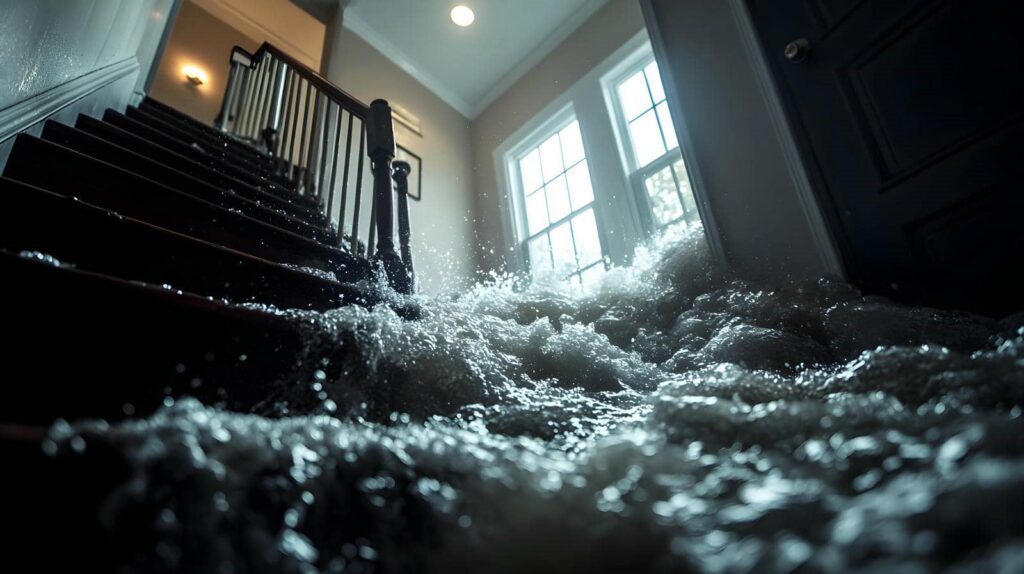
When floodwater hits your home, you need to act fast, but not recklessly. First, you’ll make the area safe by shutting off power and checking for hidden hazards, then you’ll remove standing water and debris before flood damage spreads. After that, drying walls, floors, and belongings becomes critical within the first 24 to 48 hours. The next steps can determine whether you avoid costly mold problems.
Key Takeaways
- Shut off electricity, gas, and water if safe, and avoid damp outlets or appliances.
- Remove standing water quickly using pumps or wet vacuums, room by room.
- Document all damage with photos and videos before cleanup for insurance claims.
- Dry the home fast with fans, dehumidifiers, and open windows to prevent mold.
- Remove wet insulation, drywall, and carpet padding that cannot dry completely.
Make the Area Safe First
Before you begin any cleanup, make the area safe by shutting off electricity, gas, and water if you can do so without entering standing water or other hazards.
Then you can assess the space with confidence. Wear sturdy boots, gloves, and eye protection, and treat any damp outlet, cord, or appliance as a potential electrical hazard.
Stay out of rooms with sagging ceilings, cracked walls, or the smell of gas. If you can, open windows for ventilation while keeping children and pets away.
Take photos from a safe distance for your records. These safety precautions help you protect yourself and your household before you move forward.
You’re not handling this alone; a careful first step gives your home the best chance for a smooth recovery.
Remove Water and Debris Quickly
Start removing standing water as soon as it’s safe, because the longer it sits, the more damage it can cause to floors, walls, and belongings.
Use pumps, wet vacuums, or professional water extraction equipment to lower moisture quickly and evenly. Move methodically room by room so you don’t miss hidden pools behind appliances or under furniture.
As you clear each space, separate salvageable items from soaked debris and handle debris disposal promptly to keep the area manageable. Wear gloves and boots, and place wet materials in sturdy bags or containers.
If you’re working with others, assign simple tasks so your cleanup team stays organized and confident. Fast removal helps reduce swelling, staining, and odors, and it gives your home a better chance to recover well.
Flood Damage Cleanup: What to Do First
The first few steps after a flood matter most: make sure the area is safe, shut off electricity and gas if needed, and begin documenting damage before you move or discard anything.
Call emergency services if you smell gas, see structural damage, or suspect live wires. Then notify your insurer right away so your insurance claims start with clear photos, videos, and written notes.
Stay with your household, wear protective gear, and keep children and pets away from contaminated areas.
Create a simple checklist of rooms, damaged items, and visible hazards, and save receipts for any emergency purchases.
If you can, ask a trusted neighbor or family member to help you stay organized and calm.
Quick, careful action now protects your home, your claim, and your recovery.
Dry Walls, Floors, and Belongings
Once you’ve documented the damage and made the area safe, begin removing moisture as quickly as possible to limit mold and further structural harm. Open windows, run fans, and use dehumidifiers to dry walls, floors, and furnishings.
Lift baseboards, remove wet insulation, and cut drywall 12 inches above the waterline if it’s saturated. Inspect studs and subfloors, then wipe clean surfaces with a disinfecting solution.
Remove rugs, cushions, and books to a dry, ventilated space. For salvageable items, dry them separately and sort what needs cleaning, drying, or disposal.
When materials feel dry to the touch, schedule drywall repair and compare flooring options based on damage, cost, and durability. You’ve got a clear path forward, and steady action helps your home recover faster.
Prevent Mold After Flood Damage
Mold can begin growing within 24 to 48 hours after a flood, so you’ll want to keep drying conditions aggressive and consistent.
Run dehumidifiers, fans, and HVAC systems to support humidity control, and keep indoor humidity below 50%.
Remove wet insulation, carpet padding, and drywall that can’t dry quickly.
Clean hard surfaces with detergent and water, then disinfect where needed.
Inspect hidden spaces like baseboards, cabinets, and crawl areas daily for dampness or odor.
Seal clean, dry areas to limit moisture intrusion and protect your home’s structure.
For mold prevention, document problem spots and act fast if staining or softness returns.
You’re not alone in this steady cleanup steps help your home recover safely and keep your family comfortable.
Frequently Asked Questions
Do I Need to Report Flood Damage to My Insurance Immediately?
Yes, you should report flood damage immediately to start the claims process and confirm insurance coverage. You’ll protect your eligibility, speed assessment, and join others handling repairs promptly and confidently.
Can I Keep Food That Touched Floodwater?
No, you shouldn’t keep it; floodwater can contaminate even a mountain of food. For food safety, discard anything touched by floodwater, follow flood precautions, and trust your instincts—you’re protecting your household and your community.
Should I Document Damage Before Cleanup Begins?
Yes, you should document damage before cleanup begins. Take photos, videos, and notes for a damage assessment, then support insurance claims. You’ll protect evidence, speed reporting, and feel confident throughout recovery.
How Do I Know if Electrical Systems Are Safe?
Don’t energize anything until you’ve had a licensed electrician inspect it. You should check for electrical safety signs, like corrosion, wet outlets, and tripped breakers. Good flood preparedness helps you stay connected and protected.
When Should I Call a Professional Restoration Company?
You should call a professional restoration company when floodwater lingers like a stubborn shadow, or you notice structural damage, mold, or contaminated materials. They’ll handle flood restoration and damage assessment safely, so you’ll feel supported.
Summary
When you face flood damage, act fast: shut off utilities, clear hazards, and remove standing water right away. In fact, mold can start growing within 24 to 48 hours, so your drying plan matters. Use fans, dehumidifiers, and ventilation to dry walls, floors, and belongings thoroughly. Document every loss for insurance, and follow a cleanup checklist step by step. If you stay organized and move quickly, you’ll reduce damage and speed up recovery.