
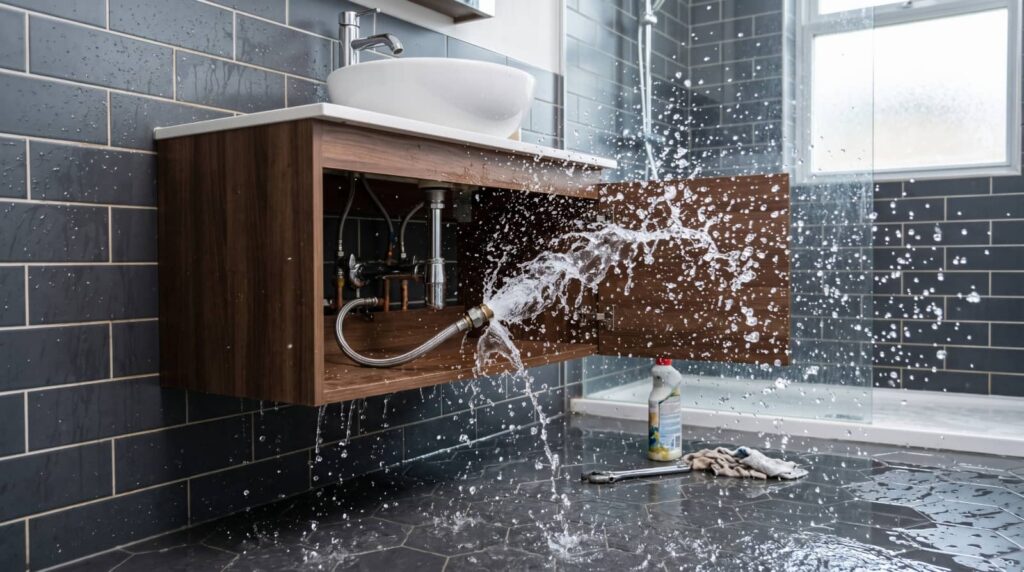
When a pipe bursts, Pipe Cleanup needs to start quickly to stop damage from spreading. Shut off the water, remove standing water, and dry the affected area with fans and dehumidifiers as soon as possible. Then clean and disinfect every wet surface, including hidden spaces where moisture can linger. If humidity remains high, mold can develop before you notice visible signs. A thorough inspection can help identify hidden moisture and other issues before they become more serious.
Key Takeaways
- Shut off the main water supply immediately and remove standing water with a wet vac, pump, or mop.
- Dry the area fast with fans, dehumidifiers, and open windows to prevent mold growth.
- Pull back wet carpets, open cabinets, and expose hidden spaces so trapped moisture can escape.
- Clean and disinfect all water-damaged hard surfaces using detergent and an approved disinfectant.
- Call a mold remediation professional if porous materials stay wet, mold appears, or damage exceeds 10 square feet.
Shut Off Water and Remove Standing Water
First, shut off the main water supply to stop the flow and limit further damage. Use water shutoff tips: locate the meter, turn the valve clockwise, and confirm faucets no longer run.
Then switch off nearby electrical circuits if water reaches outlets.
Next, begin standing water removal right away with a wet vacuum, pump, or mop. Work from the highest point toward drains, keeping floors clear so you can move safely.
Remove rugs, boxes, and other wet items to reduce saturation and help your team stay organized.
Place fans only after the area is safe and dry enough.
Check hidden pockets under cabinets and along baseboards, because trapped water can spread fast.
Act quickly, communicate with your household, and stay focused together.
Dry Burst Pipe Damage Fast
Once the standing water is out, you need to dry the burst pipe damage fast to prevent mold, warping, and hidden structural issues. Open windows if weather allows, then run fans and a dehumidifier to move damp air out of the space.
Pull back wet carpet, lift baseboards only if needed, and expose framing so airflow reaches hidden cavities. Check pipe insulation, because saturated insulation traps moisture and can keep nearby materials wet.
Use moisture meters to confirm walls, floors, and cabinets are drying to safe levels. Keep an emergency kit ready with gloves, towels, flashlights, and spare batteries so you can act quickly with your crew.
Stay consistent, monitor progress, and dry every affected area before you rebuild or close anything up.
Clean and Disinfect Damaged Surfaces
After the affected materials dry, clean and disinfect every surface that contacted burst pipe water to remove residue and reduce microbial growth.
You should scrub hard, nonporous surface materials with detergent and warm water first, then apply approved disinfecting agents at the label’s contact time.
Wear gloves, eye protection, and a mask if aerosols may form.
For painted drywall, sealed wood, tile, metal, and plastic, test a small area before full treatment to avoid damage.
Rinse if the product requires it, and dry the area with clean towels or airflow.
Replace heavily stained or warped items that won’t clean well.
Keep tools separate from clean spaces, and change wipes often so you don’t spread contamination between rooms.
Prevent Mold After a Burst Pipe
To prevent mold after a burst pipe, dry the area quickly and keep humidity low until all materials are fully dry.
You should remove standing water, then run fans and a dehumidifier to drive moisture out of walls, floors, and trim. Open cabinets and lift wet rugs so air can circulate.
Check hidden spaces, including behind baseboards and under sinks, because trapped water damage can fuel mold growth. Replace soaked insulation, drywall, or carpet padding if they stay damp.
Keep indoor humidity below 60% with consistent monitoring. Inspect the area daily for musty odors or discoloration, and act fast if conditions change.
Strong mold prevention starts with speed, airflow, and steady drying so your space stays safe and you stay confident.
When to Call a Mold Remediation Pro
Call a mold remediation pro when moisture has soaked porous materials, mold keeps returning, or the affected area is larger than about 10 square feet.
You need expert help when drywall, insulation, subflooring, or framing stays damp after cleanup, because hidden growth can spread fast. A pro uses mold identification tools, containment, HEPA filtration, and safe removal steps that you can’t match with basic cleaning.
Call sooner if you smell a musty odor, see staining behind walls, or have allergy symptoms, since health risks rise when spores stay airborne.
If you’re in this together as a household or property team, getting certified help protects the space, speeds recovery, and lowers the chance of repeat damage after a burst pipe.
Frequently Asked Questions
How Do I Locate the Main Water Shutoff Valve Quickly?
Find your main water shutoff near the water meter, where the supply enters your home, often in a basement, utility room, or exterior wall. Check for emergency preparedness labels, and test the valve carefully.
Can I Save Soaked Drywall After a Burst Pipe?
Yes, you can save soaked drywall if you act fast. You’ll need moisture mitigation, drying, and drywall restoration within 24–48 hours. Cut out saturated sections, dehumidify, and check for swelling, mold, or crumbling.
What Items Should Be Discarded After Pipe Water Damage?
Discard soaked insulation, carpet pad, drywall, ceiling tiles, particleboard, and any swollen salvageable items; mold prevention means you should toss porous materials that stayed wet over 24–48 hours, plus contaminated food, medicine, and cosmetics.
How Soon Should Insurance Be Notified After a Burst Pipe?
You should notify your insurer right away, ideally within hours, after a burst pipe. Quick reporting supports insurance claims, limits water damage disputes, and helps you join the recovery process with clear, timely documentation.
Can Burst Pipe Cleanup Affect Indoor Air Quality?
Yes, burst pipe cleanup can affect indoor air quality. You’ll reduce moisture, mold prevention risks, and airborne contaminants when you remove water quickly, dry materials thoroughly, and use air filtration during remediation.
Conclusion
After a burst pipe, you need to act fast to stop secondary damage. Shut off the water, extract standing water, and dry the area immediately with fans and dehumidifiers. Clean and disinfect every wet surface, then monitor hidden spaces for trapped moisture. Keep humidity below 60% to limit mold growth. Remember, mold can start within 24 to 48 hours after water exposure, so your speed directly affects repair costs and health risks.