
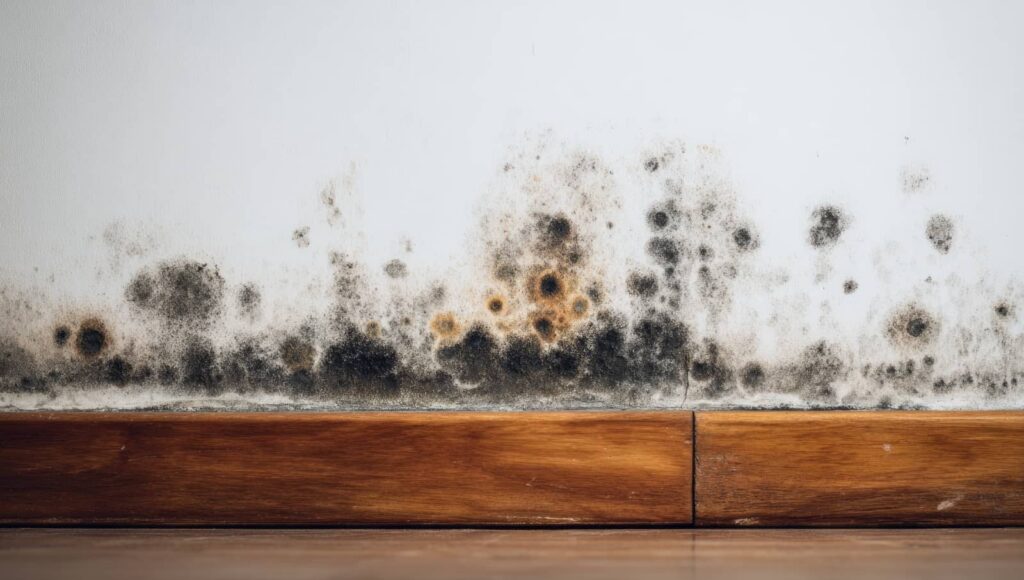
You may not know that many basement black spots aren’t mold at all, but soot, efflorescence, or mineral staining. You need to inspect texture, odor, and spread before you clean anything. Wear gloves, a respirator, and eye protection, then test the area with minimal disturbance. If moisture is still active, drying comes first, and the wrong material choice can turn a small cleanup into a larger repair.
Key Takeaways
- Inspect black spots for mold signs like fuzzy texture, spreading edges, or musty odor before cleaning.
- Wear gloves, goggles, and an N95 respirator when cleaning suspect basement stains.
- Lightly mist the area, scrub with a masonry-safe mold cleaner, and bag all contaminated waste.
- Dry the basement fast with fans, a dehumidifier, and by fixing leaks or water intrusion sources.
- Call mold remediation professionals if growth is widespread, returns, or is inside walls or HVAC systems.
How to Tell If Black Spots Are Mold
Black spots on a basement wall or floor aren’t automatically mold, but you should treat them as suspect if they spread, have a fuzzy or slimy texture, or return after cleaning.
You can use simple mold identification techniques: inspect edges, note odors, and compare color changes after the area dries. If the spot stays flat, powdery, and localized, it may be dirt or mineral residue. If it grows along damp seams, drywall, or wood, assume active mold.
In your basement community, stay alert for health effects such as sneezing, coughing, or irritated eyes after exposure. You don’t need to panic, but you should document the spot’s size, location, and texture, then monitor it closely.
When signs keep returning, you’re likely dealing with mold.
How to Test Basement Black Spots
Start with a close spot inspection: note the size, texture, color, and spread of each black area, and mark any locations near leaks or condensation.
Next, use a moisture meter or hygrometer to test the surrounding materials and confirm whether the spot stays damp.
If the stain looks active or irregular, collect a tape lift or swab sample in a clean container and label it for lab analysis.
Spot Inspection Basics
Before you clean any dark spot in a basement, inspect it closely to determine whether you’re dealing with surface dirt, mildew, or active mold.
Use spot identification techniques: note color, texture, edge shape, and whether the mark wipes off with a dry cloth. Dusty residue often points to common blackspot causes like tracked soil or soot; a fuzzy, raised patch suggests biological growth.
Check nearby materials for staining, discoloration, or pattern spread, since true growth usually expands along porous surfaces. Look for musty odor, but don’t rely on smell alone.
Document each spot with a photo and label its location so you and your household can track patterns. This method helps your cleanup team stay organized and confident before treatment.
Moisture Testing Methods
Once you’ve identified a suspicious spot, test the surrounding moisture so you can tell whether the stain is being fed by an active leak, condensation, or old damage.
Use testing equipment to map moisture sources before you clean. Press a pinless meter against the wall, then check the baseboard, floor seam, and nearby joists.
- Scan the spot in a grid pattern.
- Compare readings above and below the stain.
- Note cooler areas where damp air condenses.
- Recheck after rain or heavy shower use.
If readings rise near plumbing, gutters, or exterior walls, you’ve found an active pathway. If the numbers stay low, the mark may be residual.
You’re not guessing here; you’re joining a methodical team that works from evidence and keeps the basement honest.
Mold Sample Collection
When a black spot still looks suspicious after moisture testing, collect a sample so you can confirm whether you’re dealing with mold, dirt, or staining from past water damage.
Choose sample types based on the surface: clear tape lifts work on painted walls, swabs suit textured masonry, and bulk scrapings fit loose material.
Wear gloves and a respirator, then isolate the area to avoid spreading spores.
Use clean collection methods: press the tape firmly, rotate the swab, or place the scraping into a sterile container.
Label each specimen with location, date, and conditions.
If you’re building a careful cleanup plan, this lets you compare results with lab findings and keep your basement team informed, confident, and safe.
Clean Black Mold Safely
If you find black mold in your basement, you need to clean it carefully to avoid spreading spores or exposing yourself to harmful airborne particles.
Put on gloves, goggles, and an N95 respirator before you touch any contaminated surface. Use mold removal products labeled for masonry or concrete, and follow the manufacturer’s dwell time exactly. Keep your work area contained.
- Mist the spot lightly to reduce dust.
- Scrub the stain with a stiff brush.
- Wipe residue with disposable towels.
- Bag all waste, seal it, and remove it.
Watch for mold health effects like coughing, eye irritation, or headaches, and stop if symptoms start.
Clean tools with detergent, then wash your hands. You’ve got this, and your crew will stay safer together.
Dry Out the Basement Fast
To dry out the basement fast, stop the water source first, then remove standing water with a sump pump, wet/dry vac, or mop so moisture doesn’t keep feeding mold.
Next, open windows if weather helps, run fans to push air across wet surfaces, and set a dehumidifier near the dampest area.
Keep doors open between rooms so air can circulate, and empty the dehumidifier often for steady moisture removal.
Check wall corners, floor joints, and behind stored items, because hidden water slows basement drying.
Remove wet cardboard, rugs, and insulation promptly.
Use a hygrometer to confirm that humidity drops below 60 percent.
When you work together with these steps, you’ll dry the space faster, protect materials, and build confidence that the basement’s back under control.
Remove Mold From Basement Surfaces
Once the basement is dry, you can remove surface mold by scrubbing hard, nonporous materials with a detergent solution and a stiff brush, then wiping the area clean with disposable cloths.
Keep your mold removal focused and systematic so your space feels safe again. Use cleaning solutions labeled for household use, and follow these steps:
- Put on gloves, eye protection, and a mask.
- Mix fresh cleaning solutions in a bucket.
- Scrub small sections until the dark film lifts.
- Rinse, dry, and inspect each surface under bright light.
Work from top to bottom to avoid spreading debris. Replace cloths often, and discard them after use.
If you stay methodical, you’ll restore a cleaner, healthier basement and know you handled the job right.
Replace Porous Materials That Stayed Wet
Toss out porous materials that stayed wet long enough to soak through, since they can hold moisture, odors, and hidden mold even after the surface looks dry.
You should remove drywall, insulation, carpet padding, and fiberboard that won’t dry quickly and completely. Cut contaminated sections beyond the visible damage, bag them, and seal them before disposal.
Then inspect framing and subflooring for softness or staining before you choose replacement options. Select materials rated for damp spaces when you rebuild, and match thickness, R-value, and finish to the original assembly.
If you’re unsure whether an item qualifies as porous materials, err on the side of replacement. Acting decisively helps you protect your space, restore normal use, and keep your cleanup team aligned.
Prevent Mold in a Wet Basement
To prevent mold in a wet basement, you need to control moisture by running a dehumidifier, fixing leaks, and keeping relative humidity below 60%.
Improve air circulation with fans and open pathways so damp surfaces dry quickly after cleanup.
Seal cracks, gaps, and other water entry points to stop new moisture from entering the space.
Control Basement Moisture
Control basement moisture before mold can take hold by finding and eliminating every source of dampness. You can protect your space with disciplined moisture control and steady humidity levels.
Inspect walls, floor joints, and plumbing for seepage, then seal cracks with hydraulic cement or epoxy. Use a hygrometer to verify readings stay below 60 percent.
- Trace dark stains along the foundation.
- Check around sump pits, pipe penetrations, and window wells.
- Clean mineral deposits that signal repeated wetting.
- Reassess after each rain to confirm dryness.
Keep stored items off the floor and use waterproof bins.
When you maintain a dry basement, you support the whole home and join a group of owners who handle problems early, with confidence and control.
Improve Air Circulation
Once you’ve stopped active water intrusion, improve air circulation so lingering moisture can’t settle and feed mold growth.
You should run ventilation systems that exchange stale basement air with drier outdoor air when conditions allow.
Place a fan to move air across floor-level and wall surfaces, then use airflow techniques that break up dead zones behind stored items and along corners.
Keep furniture, boxes, and rugs off damp concrete so air can pass underneath.
If your basement has windows, open them only when outside air is cooler and less humid than inside air.
Use a dehumidifier alongside airflow to keep relative humidity below 60%.
Check that supply and exhaust paths stay unobstructed, and rotate fan positions until the space feels evenly dry and comfortable.
Seal Water Entry Points
Inspect the basement for every active entry point and seal it as soon as possible, because even small leaks can keep surfaces damp enough for mold to grow. You’ll protect the space by combining waterproofing techniques with careful exterior drainage control. Check foundation cracks, pipe penetrations, window wells, and the cove joint.
- Inject epoxy or polyurethane into cracks.
- Apply hydraulic cement around gaps.
- Fit tight gaskets on utility lines.
- Extend downspouts and regrade soil outward.
Dry each area first, then use compatible sealants for masonry, concrete, or metal. Test after rain, and mark any repeat seepage for follow-up.
When you close these paths, you’re helping your basement stay clean, stable, and part of a home that feels solid and welcoming.
When to Call Mold Remediation Pros
If mold covers more than a small area, keeps returning after cleaning, or has spread inside walls, ceilings, or HVAC components, you should call a mold remediation professional.
You’ll get a professional assessment that identifies the source, tests affected materials, and sets the right containment plan. This matters because hidden growth can raise mold health risks, especially when spores move through shared airspaces.
A pro can remove contaminated drywall, clean structural framing, and verify moisture levels before rebuilding. You stay safer, save time, and avoid repeated cleanup cycles.
If you’re part of a home that values healthy spaces, this step helps protect everyone. Don’t wait for the black spots to expand; get expert help when the problem outgrows surface cleaning or returns after drying.
Frequently Asked Questions
Can Black Spots Appear on Concrete Without Indicating Mold?
Yes, you can see black spots on concrete without mold; black spot causes include mineral staining, rust, and dirt. For concrete maintenance, inspect moisture, clean gently, and test suspicious areas before you assume contamination.
How Often Should Basement Humidity Be Checked?
Check basement humidity weekly, and daily during storms or leaks. You’ll track humidity levels and spot moisture sources quickly. Use a hygrometer, log readings, and stay proactive so you can protect your space together.
Do Dehumidifiers Work in Unheated Basements?
Yes, dehumidifiers work in unheated basements, but you’ll get lower dehumidifier efficiency in cooler air. You should monitor basement moisture, choose a low-temperature model, and keep doors closed so you belong to a drier environment.
Can Paint Cover Cleaned Basement Black Spots Permanently?
No, paint alone won’t permanently cover cleaned basement black spots. You’ll need black spot prevention first, then apply a mildew-resistant coating; otherwise, moisture returns and compromises paint durability, especially on porous masonry surfaces.
What Household Items Help Reduce Basement Musty Odors?
Baking soda works best, and you can test the theory that it neutralizes odors by leaving open boxes nearby. You’ll also use white vinegar, activated charcoal, and essential oils to absorb and mask damp basement smells.
Conclusion
If you spot black marks in your basement, treat them like a warning light, not just a stain. One homeowner I worked with ignored a small patch until a dehumidifier and cleanup stopped it from spreading. That 1 square foot of mold became a 20 square foot repair bill. You can prevent that outcome by drying fast, cleaning safely, and replacing wet porous materials. If growth keeps returning, call mold remediation pros.