
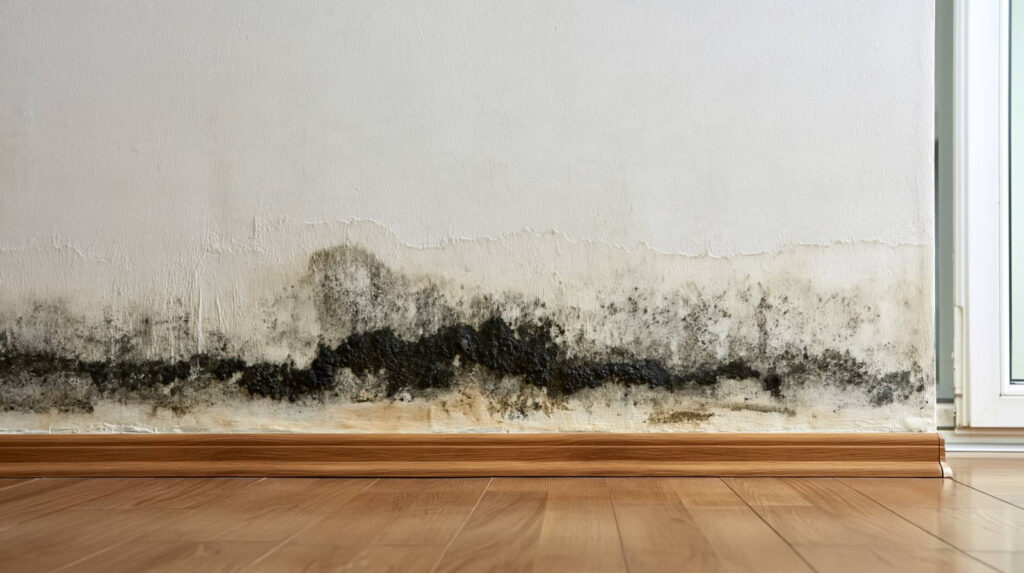
After flooding, you need to act fast to stop black mold from spreading. You’ll want to dry the area within 24 to 48 hours, inspect the damage, and Remove black growth from affected areas. Any porous materials that stayed wet too long may also need to be removed. Hard surfaces can be cleaned, but the space also needs containment and proper filtration to limit spores. The real issue is knowing when cleanup is enough and when the damage has already gone too far.
Key Takeaways
- Remove standing water immediately and dry the area within 24 to 48 hours using fans and dehumidifiers.
- Inspect walls, floors, and materials for dark, musty, or fuzzy growth before cleaning.
- Wear gloves, eye protection, and an N95 respirator when handling contaminated materials.
- Clean hard surfaces with detergent and water; use bleach only on compatible surfaces.
- Remove and bag porous items like drywall, carpet, and insulation if they stayed wet too long.
What Black Mold Looks Like After Flooding
After flooding, black mold often appears as dark green, black, or gray patches that spread across damp surfaces. You may see it on drywall, wood, insulation, carpet backing, or ceiling tiles.
It can look fuzzy, slimy, or powdery, and it often leaves a musty odor nearby. For accurate mold identification, check for irregular staining, edge growth, and areas that stay wet after the water recedes.
Don’t assume every dark mark is mold, but treat suspicious spots carefully. If you’re part of a cleanup team or family response, watch for health risks such as coughing, eye irritation, or skin irritation.
When you know these signs, you can act together with more confidence and protect your space faster.
Dry the Area Fast
Start drying the flooded area immediately to limit mold growth and material damage. You’ll get better results if you move air through the space right away. Open windows and doors when weather allows, and use fans to push damp air out, not just circulate it.
Pair that with dehumidifier use to pull moisture from walls, floors, and the air. Focus on ventilation improvement in enclosed rooms, closets, and basements, where humidity lingers.
Remove wet textiles and cardboard quickly so they don’t keep releasing moisture. Keep the room as dry as possible until surfaces no longer feel damp.
When your team acts fast, you reduce the chance that black growth spreads and help everyone regain a safer, cleaner space.
Check the Damage Before Cleaning
Once the area is dry enough to inspect safely, assess the full extent of the water and black growth before you clean anything. Your initial inspection guides every next step and helps you avoid missing hidden damage.
Document what you see with photos, notes, and room-by-room measurements so your damage assessment stays accurate. Check walls, floors, trim, and framing for staining, warping, or soft spots. Look for visible spread behind fixtures and at joints.
- Mark affected zones
- Record moisture readings
- Note odor intensity
- Compare damaged surfaces
When you map the problem early, you stay organized and your team can act with confidence. A careful damage assessment also helps you communicate clearly with pros, insurers, and anyone supporting your recovery plan.
Remove Porous Materials Safely
Porous materials that stayed wet for more than 24 to 48 hours often can’t be fully dried and should be removed to prevent mold spread.
You should wear safety precautions before you start: gloves, an N95 or better respirator, eye protection, and long sleeves.
Bag contaminated items in heavy-duty plastic, seal them, and carry them out without dragging debris through clean areas.
Remove carpet, pad, drywall, insulation, ceiling tiles, paper products, and upholstered items that absorbed floodwater.
If you’re handling a large loss, work with a trained mold removal team so you and your household stay protected.
Keep the work zone isolated, and wash hands and tools after each load.
This keeps the cleanup controlled and helps everyone in your space breathe easier.
Clean Black Mold From Hard Surfaces
After you’ve removed any damaged porous materials, you can clean black mold from hard surfaces that can be salvaged, such as tile, metal, glass, sealed wood, and some plastics.
Use mold removal techniques that scrub the surface, then rinse and dry it fully. Choose cleaning solutions like detergent and water first; for stubborn staining, use a manufacturer-approved disinfectant or diluted bleach only on compatible materials.
- Wear gloves and eye protection
- Apply solution with a damp cloth
- Scrub seams and corners well
- Dry with clean towels immediately
You’re not alone in this process; steady, careful cleaning helps your space recover.
Repeat as needed until no visible growth remains. If the material stays soft, warped, or porous, stop and replace it.
Contain the Area and Use HEPA Filtration
Seal off the affected area with plastic sheeting and keep doors closed to isolate the contamination.
Run a HEPA air scrubber in the space to capture airborne spores during cleanup. This helps limit spore spread to other rooms and reduces exposure while you work.
Seal Off Affected Area
Before you disturb the black growth, isolate the affected space so spores don’t spread to clean areas. You protect your home and your crew with tight area containment and clear safety measures. Close doors, tape seams, and block vents that connect rooms.
If you can, create a temporary barrier with plastic sheeting and painter’s tape. Keep foot traffic out.
- Post a clear entry warning
- Seal gaps around frames
- Bag debris before removal
- Limit tools to one room
This setup helps you work with control and keeps nearby surfaces from getting contaminated.
Wear protective gear before you open the barrier, and remove it only after you finish cleanup. When you seal the zone properly, you give everyone in the space a safer path forward.
Run HEPA Air Filtration
With the area sealed, you can reduce airborne spores by running a HEPA air scrubber inside the contained space.
Place the unit so it circulates all room air, and keep doors, windows, and vents closed while it runs. HEPA filtration systems capture fine particles that ordinary filters miss, so they help improve air quality during cleanup.
Choose a machine rated for the room’s square footage, and check the airflow specification before you start. Replace prefilters as needed to maintain performance, and run the scrubber continuously during work and for a short period after you finish.
You’re protecting your team’s shared space by keeping the air cleaner and more controlled, which makes the next cleaning steps safer and more efficient.
Limit Spore Spread
To limit spore spread, isolate the affected area by closing off doorways, windows, and HVAC openings, then keep traffic in and out to a minimum. You protect your space and your team by treating every disturbed surface as a potential spore source.
Run HEPA filtration inside the contained zone to capture airborne particles before they move elsewhere.
- Seal gaps with plastic sheeting and tape
- Post clear entry controls and PPE rules
- Clean tools before they leave the room
- Support moisture control to stop regrowth
Don’t dry-sweep or use standard fans, because they can push contamination into clean rooms. Keep surfaces damp when you remove debris, then bag waste immediately.
If you maintain containment, filtration, and moisture control, you reduce exposure and make the cleanup safer for everyone involved.
Call a Mold Remediation Pro
If the black growth covers a large area, keeps returning, or spreads into drywall, insulation, or subflooring, you should call a mold remediation pro.
You’ll get a trained team that can identify mold types, assess health risks, and contain contamination with proper barriers and negative air. They use moisture meters, HEPA vacuums, and targeted removal methods that you can’t match with basic cleaning.
A pro also checks hidden cavities, so you don’t miss damage behind walls or under floors.
If anyone in your household has asthma, allergies, or a weakened immune system, don’t wait. You’re not handling this alone; bring in specialists who work fast, follow standards, and help your home get back to a safe, stable condition.
Prevent Mold From Returning
Once you’ve removed the black growth, keep the area dry so it doesn’t come back. You can protect your home with steady humidity control and fast cleanup after any leak. Run exhaust fans, open windows when weather allows, and fix damp spots right away.
These mold prevention tips help you stay ahead of hidden moisture and keep your space safer for everyone in it.
- Measure indoor humidity with a hygrometer.
- Keep humidity below 60%.
- Dry carpets, drywall, and baseboards within 24 to 48 hours.
- Seal leaks around pipes, roofs, and windows.
Inspect closets, crawlspaces, and behind appliances weekly. If you notice musty odors or new staining, act fast.
You’re not alone—consistent maintenance keeps your place healthy and prevents repeat growth.
Frequently Asked Questions
What Health Risks Come From Black Growth After Flooding?
You face health concerns from mold exposure, including coughing, wheezing, eye irritation, headaches, and worsening asthma. You can also trigger allergic reactions or infections, especially if you’re immunocompromised or breathe contaminated dust.
How Soon Should Cleanup Begin After Floodwater Recedes?
You should start cleanup within 24 to 48 hours after floodwater recedes; swift, systematic cleanup timing supports fast flood recovery, reduces mold growth, and helps you protect your home, health, and community.
Can I Use Bleach on Black Growth After Flooding?
You can use bleach only on nonporous surfaces; it won’t fix porous black growth. You should scrub with approved cleaning solutions, dry quickly, and, for serious mold removal, call professionals if you’re unsure.
How Do I Know if Hidden Mold Is Behind Walls?
You’ll spot hidden mold behind walls by checking hidden mold detection cues: musty odors, wall moisture, stains, and soft drywall. You should inspect with a moisture meter, test suspicious areas, and open walls if readings stay high.
When Should Insurance Cover Mold Cleanup After Flooding?
You’ll usually get coverage when your insurance policies include mold coverage and the flood damage caused mold quickly. File immediately, document losses, and you’ll strengthen your claim; delays often let insurers deny cleanup costs.
Final Thoughts
So, after flooding, you don’t get to “wait and see” with black mold—because mold, unlike bad houseguests, does not take hints. Dry the area fast, inspect the damage, discard soaked porous materials, and clean hard surfaces with detergent, then bleach if appropriate. Contain the mess, filter the air, and call a pro if the growth is widespread. If you act quickly, you’ll stop mold from turning your home into its own ecosystem.