
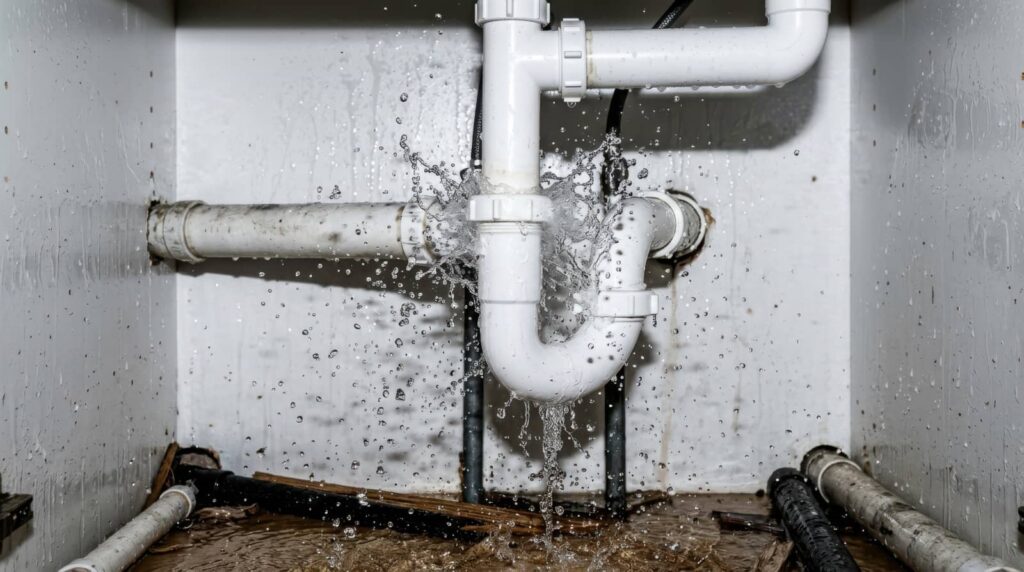
How you respond to Pipe Damage can determine how much damage you ultimately face. If a pipe bursts, shut off the main water supply and power first, then remove standing water and dry the affected area as quickly as possible. The final inspection is where many people overlook hidden moisture, mold, or structural damage. Catching these problems early can help prevent a minor pipe issue from turning into a much more costly restoration project.
Key Takeaways
- Shut off the main water supply immediately and cut power to affected areas for safety.
- Remove standing water fast using pumps, vacuums, mops, and fans to reduce further damage.
- Dry hidden spaces under cabinets, behind appliances, and inside walls to prevent mold growth.
- Inspect pipes, drywall, flooring, and insulation, then replace any swollen or warped materials.
- Prevent future damage by insulating pipes, inspecting plumbing regularly, and keeping emergency kits ready.
Stop Burst Pipe Water and Shut Off Power
First, shut off the main water supply to stop the burst pipe from flooding the area. Then cut power to any affected rooms if water is near outlets, appliances, or wiring.
You need to act fast and stay calm; your crew can handle the next steps with you. Open no fixtures, and check neighboring valves so pressure doesn’t build again.
If you can safely reach it, use your emergency kit to grab gloves, a flashlight, and a wrench. Then inspect the break from a safe distance and note whether pipe insulation shifted or split, since that can point to the failure point.
Keep everyone clear of wet electrical areas. If the leak continues, contact a licensed plumber right away; your team’s safety comes first.
Remove Standing Water and Dry Fast
Once the water is off and the area is safe, remove standing water as quickly as you can with a wet/dry vacuum, mop, towels, or a sump pump if needed.
Focus on water removal from floors, baseboards, and low spots so moisture doesn’t keep spreading. Open windows if weather helps, and run fans, dehumidifiers, and HVAC to push air across wet surfaces.
Pull up rugs, move furniture, and separate items so air can reach both sides. Use drying techniques that create airflow and reduce humidity fast.
Check hidden spaces like under cabinets and behind appliances, because trapped water lingers there.
Act now, stay organized, and work as a team to dry the space efficiently.
Repair Damage and Check for Mold
After you’ve removed the standing water and dried the area, inspect the pipe, walls, flooring, and cabinets for visible damage.
Replace swollen drywall, warped trim, and compromised insulation right away so your space stays safe and sound.
During pipe inspection, look for cracks, loose joints, and corrosion, then tighten or reroute fittings as needed.
For mold prevention, clean hard surfaces with an appropriate disinfectant and keep the area ventilated until humidity drops.
- Check subfloors for soft spots
- Remove soaked porous materials
- Seal leaks with approved repair parts
- Dry hidden cavities with fans
- Monitor for musty odors daily
Frequently Asked Questions
How Can I Tell if Hidden Pipes Are Leaking?
You can tell hidden pipes’re leaking by checking for unexplained damp spots, rising water bills, musty odors, and wall discoloration. Use leak detection tools and perform moisture assessment to confirm issues before damage spreads.
What Insurance Usually Covers Pipe Damage Restoration?
You’ll usually get coverage from homeowners insurance if a sudden pipe burst causes damage, but not for neglect or wear. Check your insurance policies for coverage limits, deductibles, exclusions, and claim timing before you repair.
How Long Should Plumbing Repairs Typically Take?
Usually, you’ll wait one to three days, though larger jobs can take longer. Like a 2023 leak repair that stretched from four hours to two days, pipe repair timelines depend on plumbing repair factors you can’t ignore.
When Is Professional Mold Testing Necessary After a Leak?
You need professional mold testing after a leak when moisture lasted over 24-48 hours, odors persist, visible mold appears, or you’ve got health risks. Testing confirms hidden mold growth and guides safe remediation.
Which Pipe Materials Are Most Resistant to Damage?
PVC offers strong corrosion resistance; Copper durability handles heat well; PEX flexibility absorbs freezing stress; Cast iron resilience suits heavy-duty lines. You’ll choose like a pro when you match conditions, budget, and long-term service needs.
Final Thoughts
If a pipe bursts, don’t let the water keep doing its “helpful” work. You stop the main supply and power first, because flooding and electricity make a bad team. Then you remove standing water fast and dry everything thoroughly, or moisture will quietly invite mold. Finally, inspect the damage, repair compromised materials, and disinfect surfaces. The irony is simple: quick action feels urgent, but waiting just makes the cleanup bigger and the repairs pricier.