
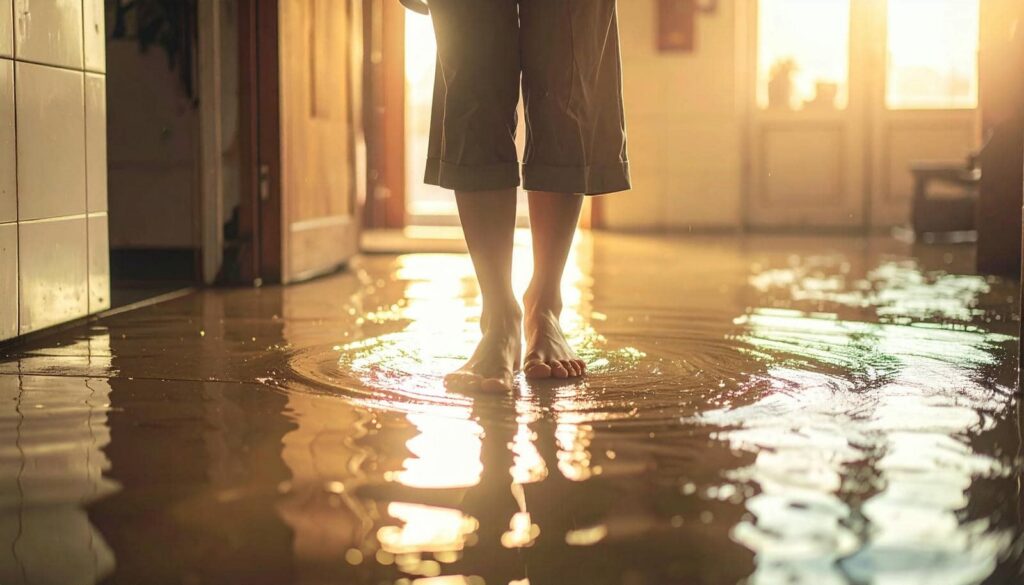
When you wake up to 2 inches of water in the basement after a burst supply line, you need to act fast. First, find the basement water leak and shut off the water source. Then, pump out the standing water with a submersible pump or wet/dry vacuum, and route discharge away from the foundation. After that, dry the space with fans and a dehumidifier, because what you do next can decide whether mold spreads.
Key Takeaways
- Identify the water source first and trace leaks at walls, pipe joints, appliances, and drains.
- Shut off the fixture valve or main water valve to stop further flooding safely.
- Remove standing water with a submersible pump or wet/dry vacuum from the lowest point.
- Dry the basement using fans, dehumidifiers, and cross-ventilation to lower humidity below 60%.
- Prevent mold by cleaning nonporous surfaces, discarding contaminated materials, and monitoring for odors or discoloration.
Find the Leak and Shut Off Water
Start with a quick, systematic inspection to find the water source before you remove any more water. You should use leak detection by tracing wet walls, pipe joints, appliance connections, and floor drains, then check for active dripping, spraying, or seepage.
If you spot a plumbing failure, complete water shutoff at the fixture valve first, then close the main valve if needed. If you can’t isolate the source safely, call your utility or a licensed plumber immediately.
Mark the affected area, note any audible flow, and avoid disturbing energized equipment. You’re not dealing with this alone; a calm, ordered response protects your space and supports the rest of your team.
Once the source stops, verify that no new water enters the basement before you move to the next step.
Pump Out a Flooded Basement Fast
With the leak stopped, move immediately to water removal by setting up a submersible pump or wet/dry vacuum at the lowest point in the basement.
Place the discharge hose outdoors and uphill from drains. If you’ve got a working sump pump, verify power, float travel, and flow before relying on it.
Keep cords dry and use a GFCI outlet. Pump in stages if the water is deep, so you don’t stir up debris or overload the unit.
Watch the waterline and reposition the intake as needed. Remove standing water until only a thin film remains.
Stay focused and work with your team so everyone moves safely and efficiently. Fast extraction limits structural stress and reduces water damage, helping your space recover faster and with less loss.
Dry the Basement and Prevent Mold
Once the standing water is gone, turn on fans and a dehumidifier to pull moisture from the air and exposed materials.
Place airflow across walls, flooring, and hidden cavities, then keep doors open for cross-ventilation.
Check carpet, baseboards, insulation, and drywall for dampness; remove any saturated porous material that won’t dry within 24 to 48 hours.
Use a hygrometer to verify humidity control and target below 60%.
Wipe nonporous surfaces with a clean, disinfecting solution, then dry them fully.
Inspect corners and behind stored items daily for musty odors, discoloration, or condensation.
For effective mold prevention, wear gloves and a respirator, discard contaminated debris promptly, and keep the space warm enough to accelerate evaporation while your crew restores the basement.
Frequently Asked Questions
Can Basement Water Damage Affect Electrical Wiring?
Yes—basement water damage can compromise your electrical wiring, increasing shock and fire risk. You should prioritize electrical safety, shut off power if needed, and schedule a wiring inspection before you re-energize anything.
How Long Does a Wet Basement Take to Dry Completely?
You’re looking at days to weeks, depending on saturation, ventilation, and humidity. Start a moisture assessment, then monitor the drying process with dehumidifiers and airflow. You’ll know it’s complete when readings stabilize.
Should I Call My Insurance Before Cleanup Starts?
Yes—call your insurer before cleanup starts. You’ll confirm insurance coverage, start the claim process, and document damage properly. That keeps you aligned with policy requirements and helps your team move forward together, efficiently.
What Items Should I Remove First From a Flooded Basement?
First, remove electronics, papers, and upholstered furniture for mold prevention. Then move rugs, wood items, and boxed belongings. You’ll protect salvageable items fast; time’s money, and furniture removal should follow structural safety checks.
When Is Professional Water Extraction Necessary?
You need professional help when signs flooding show rapid rise, sewage, or hidden damage. If your water extraction methods can’t keep up, call experts; they’ll protect your space and help you restore it safely.
Wrap-Up
So, is the theory true that speed matters most in basement water extraction? Yes. If you find the leak and shut off the source, you stop additional damage. Then you pump out the flooded area fast with a submersible pump or wet/dry vacuum, routing discharge away from drains. Finally, you dry the basement with fans and a dehumidifier, then disinfect surfaces to prevent mold. Act quickly, and you’ll limit structural damage and health risks.