
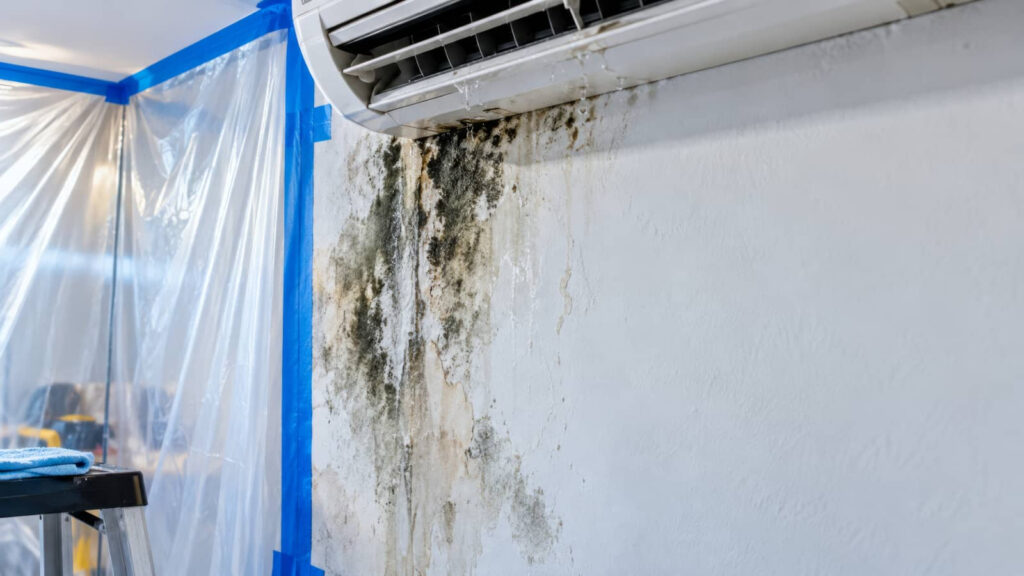
You probably don’t realize that mold can start colonizing damp basement materials within 24 to 48 hours after a leak. Professional mold cleanup starts by stopping the water source, then drying the area fast, containing contamination, removing damaged materials safely, and disinfecting all affected surfaces. Hidden growth often stays behind walls or under flooring, and that’s where the real risk begins.
Key Takeaways
- Stop the leak first by sealing cracks, fixing plumbing, and checking wall joints, floor cracks, and window wells.
- Remove standing water quickly, then dry the basement with fans, dehumidifiers, and moisture meter checks.
- Contain the mold area by closing doors, sealing plastic sheeting, and turning off nearby HVAC vents.
- Remove moldy materials safely, bag debris tightly, and clean remaining surfaces with detergent and an approved disinfectant.
- Monitor humidity, ventilation, and hidden condensation regularly to prevent mold from returning.
Stop the Basement Leak First
Before you clean up any visible mold, you need to stop the water intrusion that’s feeding it.
You should inspect wall joints, floor cracks, pipe penetrations, and window wells for active seepage. Use leak detection methods such as moisture meters, infrared scanning, and a careful hose test to pinpoint the source.
Once you confirm the entry point, make immediate repairs: seal cracks, tighten plumbing fittings, and redirect runoff away from the foundation.
If groundwater pressure is the issue, choose targeted waterproofing solutions, including exterior membrane sealing or interior drainage corrections.
Don’t treat symptoms while the leak remains active; you’ll keep the colony growing.
When you address the source first, you protect your basement team, your home, and your next cleanup step.
Dry the Wet Basement Areas
Once you’ve stopped the leak, dry the basement fast to cut off the moisture mold needs to keep spreading. You should remove standing water with a wet vacuum or pump, then use high-capacity fans and dehumidifiers to drive humidity down.
Aim airflow across damp walls, floors, and framing so evaporation happens quickly and evenly. Open windows only if outside air is drier; otherwise, rely on controlled ventilation methods that don’t add more moisture.
Check hidden areas behind stored items and under mats, because trapped water undermines moisture control. You’ll protect your space better when you keep surfaces dry, monitor relative humidity, and replace soaked porous materials that can’t be restored.
Act now, and you’ll give your basement the clean, stable conditions it needs.
Contain the Mold Area
Seal off the affected area as soon as possible to stop mold spores from spreading to cleaner parts of the basement.
You should close interior doors, hang plastic sheeting, and tape every seam to create a tight barrier. Use mold containment methods that limit airflow, and keep a single access point for anyone entering the work zone.
Turn off HVAC vents near the area if you can do so safely, since circulation can carry spores throughout shared spaces. You’ll protect your household and strengthen mold growth prevention by isolating the leak zone before any disturbance occurs.
Place a fan only if it exhausts air outdoors and doesn’t recirculate contaminants.
Stay organized, stay calm, and work as a team so the containment stays intact.
Remove Moldy Materials Safely
Remove moldy materials as soon as you’ve contained the area, because wet drywall, carpet, insulation, and porous wood often can’t be fully cleaned once mold has penetrated them. You should treat this step as core mold removal, not cleanup.
Follow these safety precautions so your crew stays aligned and protected:
- Wear gloves, goggles, and an N95 or better.
- Cut damaged sections into manageable pieces.
- Bag materials in heavy-duty plastic and seal them tight.
- Carry debris out through a direct path.
You’ll reduce spread by moving slowly and avoiding tearing. Keep removed items away from living spaces, and work with a partner when possible.
If material crumbles or releases heavy dust, stop and reassess. Strong teams handle removal methodically, because precision protects everyone involved.
Clean and Disinfect Basement Surfaces
You should scrub basement surfaces with detergent and water to remove visible residue, then rinse and wipe away loosened debris.
After cleaning, apply an appropriate disinfectant at the labeled dilution and contact time to treated surfaces.
Let everything dry completely, then inspect for remaining staining, odor, or damage that could indicate residual moisture or mold growth.
Surface Cleaning Steps
Start by cleaning all hard basement surfaces with detergent and water to lift dirt, silt, and mold residue before you disinfect. You’ll work best when you follow consistent mold identification techniques and choose surface treatment options that match the material.
Keep your crew aligned with these steps:
- Remove loose debris with damp cloths or HEPA vacuuming.
- Scrub nonporous surfaces until visible residue is gone.
- Rinse with clean water and wipe dry immediately.
- Inspect seams, corners, and utility penetrations for remaining film.
Use separate tools for contaminated areas, and don’t over-wet drywall, insulation, or wood trim.
You’re building a safer basement when you clean methodically, document what you find, and stay disciplined about drying. That approach helps your team act with confidence and consistency.
Disinfection Solution Use
Once the basement surfaces are visibly clean and dry, apply a mold-killing disinfectant that matches the material and the manufacturer’s label directions.
You should select cleaning agents approved for porous or nonporous surfaces, then mix and apply them exactly as specified.
Use disinfection methods that deliver full contact time, because brief wiping won’t control residual spores.
Wear gloves, eye protection, and a respirator if the label calls for it, and keep the area restricted so your team stays safe and focused.
Work from the least contaminated section toward the most affected area to avoid cross-contamination.
Never combine products or increase concentration beyond the label; stronger isn’t safer.
If the surface is painted, finished, or delicate, verify compatibility first so you protect the material while you disinfect it thoroughly.
Drying And Inspection
After disinfection, dry the basement surfaces completely and inspect them under strong light for any remaining staining, residue, or active growth.
You’ll protect your space by verifying every wall seam, floor joint, and utility penetration before reoccupying the area. Use fans, dehumidifiers, and open access paths to accelerate moisture control and support ventilation improvement.
- Check concrete, framing, and insulation for dampness.
- Wipe hidden edges and measure surface dryness.
- Reinspect after 24 hours for return moisture.
- Document clean areas and flag anything suspicious.
If you find discoloration, repeat cleaning immediately and isolate the spot.
Stay methodical; your basement team relies on precise follow-through to keep the environment safe, stable, and mold-resistant.
Check for Hidden Mold Growth
Hidden mold often develops behind drywall, under insulation, beneath flooring, and inside wall cavities after a basement leak. You need a disciplined moisture assessment before you trust visible surfaces.
Use mold detection methods such as infrared scanning, borescope viewing, and targeted sampling when staining, musty odor, or warped materials suggest concealed growth. Check baseplates, sill plates, joist ends, and the backs of finished walls where moisture lingers longest.
If your readings stay elevated, assume hidden colonies may still be active. In a professional cleanup, you’re part of a team that verifies every suspect cavity, not just the obvious spots.
Document each finding, label affected areas, and keep your inspection systematic so you can move forward with confidence and shared standards.
Prevent Mold After Basement Leaks
To prevent mold after a basement leak, you need to dry the structure fast, control humidity, and remove any porous materials that stayed wet too long. You’ll protect your space and your household by acting within 24 to 48 hours.
- Run dehumidifiers and air movers until framing reads below 15% moisture.
- Discard soaked drywall, insulation, and carpet padding.
- Upgrade to mold resistant materials during repairs.
- Add ventilation improvements, then keep relative humidity under 60%.
Inspect baseplates, corners, and sill plates with a moisture meter. Clean hard surfaces with an EPA-registered antimicrobial, then monitor for condensation.
If you stay consistent, you’ll reduce spore growth, support healthier indoor air, and keep your basement ready for the crew you trust.
Frequently Asked Questions
How Long Does Professional Mold Cleanup Usually Take?
Usually, you’ll see professional mold cleanup take one to five days, depending on contamination severity, material removal, and drying. Your cleanup timeline shortens when mold growth is localized and access is straightforward.
Does Homeowner’s Insurance Cover Basement Mold Remediation?
Usually, your homeowner’s insurance won’t cover basement mold remediation unless your insurance policy includes mold coverage and the damage stems from a sudden covered event. You’ve got to inspect exclusions, limits, and reporting deadlines carefully.
Can Mold Return After Professional Basement Cleanup?
Yes, mold can return after professional cleanup if you don’t control moisture. You should apply mold prevention strategies, schedule post remediation inspections, and maintain humidity below 60% so you protect your basement and community.
When Should I Hire a Mold Remediation Specialist?
You should hire a mold remediation specialist when mold growth covers over 10 square feet, or if you notice health risks. You’ll protect your home, and you won’t face hidden moisture alone.
What Safety Gear Do Professionals Use During Cleanup?
You use respirators, gloves, goggles, coveralls, and boots. You follow safety protocols and cleanup procedures to limit exposure, protect skin, and contain spores. You’ll work confidently with a trained team that keeps you included.
Summary
You stop the leak, dry the basement, and contain the problem; you remove damaged materials, clean the surfaces, and inspect for hidden growth; you then control humidity, improve ventilation, and monitor the space. By following these steps, you reduce spore spread, limit structural damage, and prevent repeat contamination. Keep acting quickly, stay methodical, and use proper protective measures. With consistent maintenance, you can keep your basement dry, clean, and mold-resistant.