
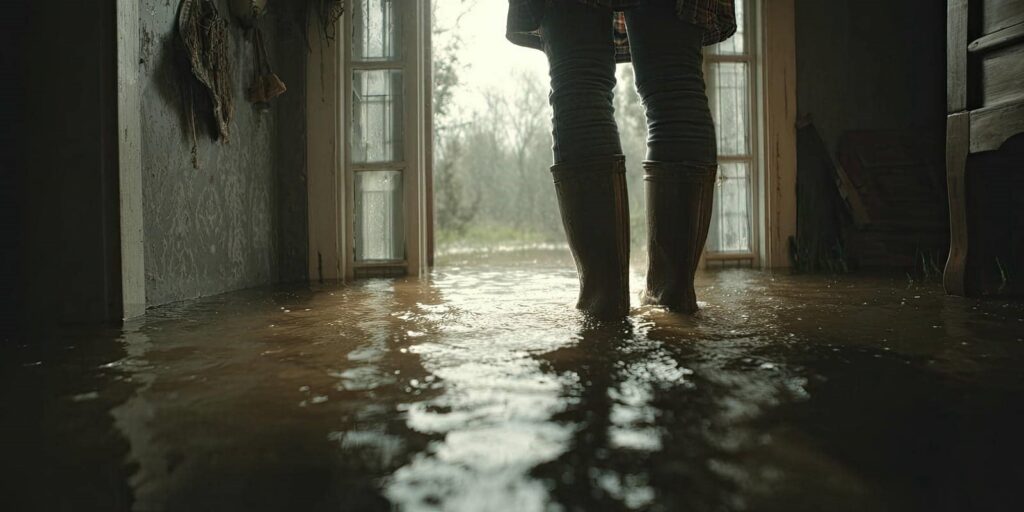
About 14,000 people face a water damage emergency each day, so you need a plan fast. You should shut off utilities, pull out standing water, and move salvageable items before damage spreads. Then dry hidden spaces, disinfect surfaces, and control humidity to slow mold. If the flood is extensive, you may need professional help. The right sequence can save time, money, and a lot more than you expect.
Key Takeaways
- Shut off electricity and main water before entering flooded areas, and check for gas smells or sparks.
- Wear gloves, boots, and eye protection, and keep children and pets away from the cleanup zone.
- Remove standing water quickly with pumps or wet vacs, and clear drains and pathways for proper drainage.
- Move salvageable items to a dry area, photograph damage, and inspect walls, floors, and cavities for hidden moisture.
- Clean and disinfect all affected surfaces, use fans and dehumidifiers, and call professionals for extensive damage or mold.
Shut Off Water and Make the Area Safe
Before you start cleanup, shut off the main water supply if it’s still leaking and cut power to any affected areas from a safe location.
Then confirm the area’s water safety by checking for contaminated runoff, broken lines, and exposed electrical parts.
Wear gloves, boots, and eye protection before you enter. Keep children and pets out until you finish a quick hazard assessment of floors, walls, and outlets.
If you smell gas, hear hissing, or see sparks, leave and call emergency services.
Mark unstable surfaces and avoid standing in pooled water near cords or appliances. Use a flashlight, not open flame, for inspection.
When you secure utilities and identify risks, you protect yourself, reduce damage, and keep your team aligned.
Remove Standing Flood Water Fast
Pump standing water out as quickly as you can using a submersible pump, wet vac, or utility pump sized for the volume.
Open drainage paths by clearing debris from floor drains, doorways, and low spots so water can move out faster.
Keep the flow continuous and monitor the area for new pooling until the water level drops.
Pump Water Out Quickly
As soon as it’s safe to enter the area, remove standing flood water as quickly as possible to limit structural damage, mold growth, and contamination.
Use submersible pumps for deep water and place them in the lowest point you can reach. Keep the discharge hose secured so it doesn’t kink or slip, and monitor the pump so it keeps moving water efficiently.
If water is shallow, switch to wet vacuums or other water extraction tools that match the load. Wear protective gear, keep cords and outlets dry, and shut off power to wet circuits before you start.
Work methodically, checking the floor and corners for hidden pockets of water. The faster you remove the floodwater, the sooner your cleanup team can dry materials and reduce losses.
Open Drainage Paths
Clear drainage paths right away so floodwater can move out of the space without pooling in low spots. You should inspect doors, thresholds, floor drains, and yard exits, then remove debris, silt, and damaged items that block flow.
Open cleanouts and verify that drainage systems aren’t backed up. If water sits outside, check landscape grading, and cut temporary channels only where local codes allow.
Keep traffic off softened ground so you don’t compress soil and slow runoff. If you’re working with neighbors, coordinate to keep shared exits clear and safe.
Use pumps, squeegees, and hoses to guide water toward approved outlets. Watch for electrical hazards and wear protective gear.
Fast, organized drainage helps your crew stay efficient and reduces structural damage.
Salvage Furniture and Belongings Quickly
Act fast to save what you can: move dry furniture, rugs, electronics, and documents to a clean, dry area before mold sets in.
You should separate keepsakes from damaged items and label each piece for quick item assessment.
Check frames, cushions, and joints for swelling, stains, or loosened hardware.
If a piece is only damp, promote airflow and plan furniture restoration soon.
For wood, wipe surfaces and keep finishes from staying wet.
For upholstered items, remove loose covers and bag small parts.
You’ll protect your space and your people by organizing belongings into salvage, clean, and discard groups.
Photograph damage for records, then work methodically so nothing gets missed.
Quick decisions now help you preserve familiar items and restore a sense of home.
Dry Walls, Floors, and Hidden Spaces
You should remove baseboards, drill small access holes if needed, and use fans and dehumidifiers to dry wall cavities fast.
Lift flooring where water can hide in floor and hidden gaps, then ventilate those spaces until moisture readings drop.
Check corners, trim, and voids with a moisture meter so you can catch trapped water before mold starts.
Dry Wall Cavities
Water often hides inside wall cavities, under flooring, and in other sealed spaces, where it can keep soaking materials long after surface water is gone.
You need a careful dry wall inspection to find stained panels, swollen seams, and soft spots. Cut small access openings near the base, check both sides, and use a moisture meter on framing.
If insulation feels wet, bag it and remove it right away; insulation removal helps prevent trapped moisture and mold growth. Then air the cavity with fans and dehumidifiers until readings return to normal.
You should also verify that electrical lines are safe before opening any wall. When you work methodically, you protect your home and help your crew restore the space with confidence.
Floor And Hidden Gaps
Even after visible cleanup, moisture can linger beneath flooring, behind trim, and in hidden gaps where airflow is poor. You need to inspect these spaces with a meter and by touch, because hidden moisture can damage subfloors and promote mold.
Pull back baseboards, lift affected flooring materials, and check seams, corners, and junctions.
- Remove wet padding and debris right away.
- Open cavities so air can move through them.
- Use dehumidifiers and fans to dry layered materials.
- Replace warped boards, swollen underlayment, and contaminated trim.
If you work methodically, you’ll protect the structure and make your space safe for everyone who shares it.
Document readings daily, and don’t reinstall finishes until moisture levels match dry areas nearby.
Clean and Disinfect Flood-Damaged Surfaces
Once floodwater has receded and materials are dry enough to handle, clean every affected surface with soap and clean water to remove mud, silt, and debris. Then disinfect hard, nonporous surfaces with a bleach solution or EPA-registered disinfectant.
Wear gloves, boots, and eye protection, and keep your cleaning supplies separate from food-use items. Scrub seams, corners, and hardware where contaminants settle, then rinse and let disinfecting agents contact the surface for the labeled time.
Use fresh solutions, mix them exactly as directed, and replace any item that can’t be fully cleaned. For porous materials, follow local disposal guidance and remove residues promptly.
Work methodically room by room so you and your team stay organized, reduce cross-contamination, and restore the space safely and efficiently for everyone involved.
Prevent Mold Growth After Flooding
As soon as flood-affected areas are clean, you need to dry them fast to prevent mold from taking hold. Use mold prevention steps that keep your space safe and your crew on track. Open windows if weather allows, run fans, and pull moisture from carpets, drywall, and insulation. Keep humidity control tight; aim for below 60% indoors.
Remove wet materials quickly.
Ventilate rooms nonstop.
Use dehumidifiers.
Check hidden spaces daily.
Watch corners, closets, and under sinks, since moisture lingers there. If surfaces stay damp after 24 to 48 hours, mold can start growing.
You’ll protect your home best when you act fast, stay organized, and keep every room as dry as possible.
Call Flood Cleanup Pros When Needed
If drying and cleanup are moving slowly, call a flood cleanup pro before damage spreads. You’ll get emergency response, industrial drying, and a professional assessment that pinpoints hidden moisture, structural risks, and contamination.
If water sat more than 24 hours, if sewage entered, or if walls, insulation, or subfloors feel soft, don’t push ahead alone. A trained crew can extract water, sanitize surfaces, and document losses for insurance while you focus on safety and recovery.
Ask for moisture readings, containment, and a clear scope before work starts. You belong in a home that’s safe, dry, and stable, and pros help you get there faster without guesswork or repeat damage.
Frequently Asked Questions
How Soon Should Insurance Claims Be Filed After Flood Cleanup?
File your claim as soon as possible after flood cleanup, ideally within 24 to 48 hours. You’ll keep the claim process smoother, protect insurance coverage, and give your insurer clear, timely documentation.
What Personal Protective Equipment Is Best for Flood Cleanup?
You should wear impermeable gloves, rubber boots, goggles, and a fitted respirator; gloves usage limits contamination, and respirator importance grows with mold, silt, and chemicals. You’ll stay safer when your gear seals well.
Can Floodwater Damage Electrical Wiring Behind Walls?
Yes, floodwater can damage wiring behind walls, corrode connections, and create electrical hazards. You should inspect outlets, test circuits, and consult a licensed electrician; you’re not alone, and careful floodwater inspection protects everyone.
How Do I Know if Tap Water Is Safe After Flooding?
You’ll know tap water’s safe after flooding only through water testing. Watch for contamination signs like discoloration, odor, or sediment. Boil or avoid use until authorities clear it, since hidden pathogens can linger.
What Documents Should I Photograph Before Cleanup Starts?
Photograph everything before cleanup, like a careful map. You’ll need document organization shots of damage, serial numbers, and room layouts, plus insurance paperwork, receipts, IDs, and utility bills, so you can file claims quickly.
Wrap-Up
By following these flood cleanup tips, you can act fast and protect your home from further damage. Shut off utilities, remove water, and save what you can without delay. Dry every surface, clean and disinfect thoroughly, and keep humidity low to stop mold before it starts. If the damage feels too big, call pros right away. Think of your home like a ship: quick repairs help it stay afloat after the storm.