You might think structural drying is just about running fans, but that misses the risk. You first stop the water and assess the damage, then extract all standing moisture. Next, you remove wet materials that won’t dry, set drying equipment for proper airflow, and monitor moisture levels with calibrated meters until the structure reaches target conditions. Each step affects the next, and one skipped detail can change the outcome.
Key Takeaways
- Shut off the water source, isolate the damage, and document affected areas and contents.
- Extract standing water immediately using pumps, truck mounts, and weighted extractors.
- Remove wet, non-dryable materials like insulation, underlayment, and ceiling tiles.
- Place air movers and dehumidifiers strategically to promote balanced, efficient drying.
- Monitor moisture readings regularly until all materials reach safe dry levels.
Stop the Water and Assess the Damage
Before you begin drying, you need to stop the source of water and identify how far the damage has spread. Shut off the main supply, isolate affected fixtures, and confirm that no active water sources remain.
Then perform a damage assessment of floors, walls, insulation, and adjacent rooms. Mark visible staining, swelling, or delamination, and note where materials feel cool or damp.
You should also document contents exposure so your team can coordinate the next steps with confidence. If you’re part of a restoration crew or a homeowner working with one, this process keeps everyone aligned and reduces missed hazards.
Record measurements, take photos, and compare affected areas to dry reference points. Clear documentation helps you protect the structure, support insurance claims, and move forward together.
Extract Standing Water and Moisture
Start extracting standing water as soon as the source is secured and the damage has been mapped. You’ll protect the structure faster when you use the right water removal techniques, beginning with truck mounts, submersible pumps, and weighted extractors on carpeted areas.
Move systematically from the perimeter to the center, and monitor the depth so you don’t leave hidden pockets behind. For porous assemblies, apply moisture extraction methods with air movers and dehumidifiers immediately after bulk water is removed.
Check subfloors, seams, and connections with a moisture meter, then log readings for each zone. Work as a coordinated team, keep pathways clear, and verify that your extraction lowers saturation to the target level before you advance.
Remove Wet Materials That Won’t Dry
Once you’ve removed the bulk water, identify materials that can’t be dried in place and remove them quickly to prevent microbial growth and secondary damage.
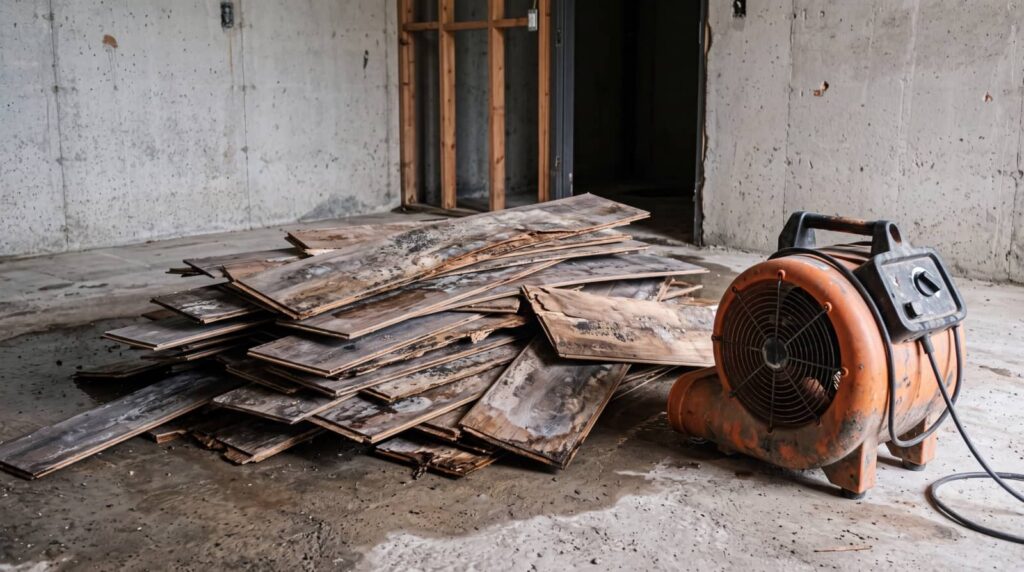
You should prioritize porous items that stay saturated, including pad underlayment, ceiling tile, insulation, and swollen particleboard. Cut and remove only the affected sections when you can isolate clean boundaries, then bag debris and protect adjacent finishes.
Use material selection to judge what can recover and what must go. If a component traps water, delaminates, or softens, it won’t support mold prevention.
Keep work areas organized so your crew can track each removal and document conditions for the claim file. When you act decisively, you reduce contamination, protect salvageable assemblies, and help the structure move toward safe, code-compliant restoration.
Set Up Structural Drying Equipment
Position the drying equipment so it targets the wettest structural areas and promotes balanced airflow across the affected space.
You’ll join a proven workflow when you align air movers along walls, under cavities, and across floor surfaces to accelerate evaporation.
Verify equipment placement keeps cords clear, prevents obstructions, and avoids directing airflow at intact finishes that don’t need aggressive drying.
Set dehumidifiers in central locations with unrestricted intake and exhaust, and connect ducts only when the layout supports efficient moisture removal.
Match your drying techniques to the building materials, the extent of saturation, and the room geometry.
Secure each unit, confirm proper power supply, and document placement before start-up.
This disciplined setup helps your crew work consistently, safely, and with shared purpose.
Monitor Moisture Levels Until Dry
As the structure dries, you’ll monitor moisture levels at regular intervals to confirm the materials are actually releasing water and not just feeling dry on the surface.
Use calibrated meters on framing, subflooring, drywall, and insulation, and record each reading in the same locations every time. Compare results against unaffected areas and target dry standards so you can verify progress objectively.
Maintain moisture monitoring through each shift, and adjust airflow, dehumidification, and humidity control when readings stall. If any zone lags, isolate it, inspect for hidden pockets, and keep drying until values stabilize within acceptable range.
You’re part of a disciplined team when you document trends clearly, communicate findings quickly, and don’t close the job until the entire assembly is dry.
Frequently Asked Questions
How Soon Should Insurance Be Notified After Water Damage?
You should notify your insurer immediately after water damage, ideally within hours. Early reporting speeds insurance claims, preserves evidence, and lets you follow required procedures with your team, reducing delays, disputes, and avoidable loss.
What Safety Risks Exist During Structural Drying?
You face electrical shock, slip hazards, hidden mold, contaminated water, sharp debris, and structural instability. Follow safety procedures, wear personal protective equipment, ventilate spaces, and monitor moisture and airborne contaminants to protect your team.
Can Contaminated Water Damage Require Special Cleanup Procedures?
Yes, contaminated water damage can require special cleanup procedures. You’ll need to remove affected materials, disinfect surfaces, and dry thoroughly. Follow health-safe protocols so your team stays protected and your restoration meets standards.
How Do I Prevent Mold Growth After Drying Begins?
You prevent mold by reducing moisture quickly, increasing airflow, and controlling humidity; you’ll choose proper mold prevention techniques and drying equipment types, then monitor surfaces, remove wet materials, and verify dryness so you’re covered.
Should Electrical Systems Be Inspected After Flooding?
Yes—you should inspect electrical systems after flooding. You’ll protect yourself by verifying electrical safety, isolating flood damage, and having a licensed electrician test wiring, outlets, and panels before you restore power or occupy the space.
Final Thoughts
When you stop the water, extract the standing moisture, remove saturated materials, set up drying equipment, and monitor until readings stabilize, you do more than dry a structure—you restore control. Treat each step like gears in a calibrated machine: if one slips, the whole system stalls. By following this sequence, you protect building assemblies, prevent microbial growth, and verify complete drying. Finish only when your meters confirm the job’s surface and substrate are truly ready.