
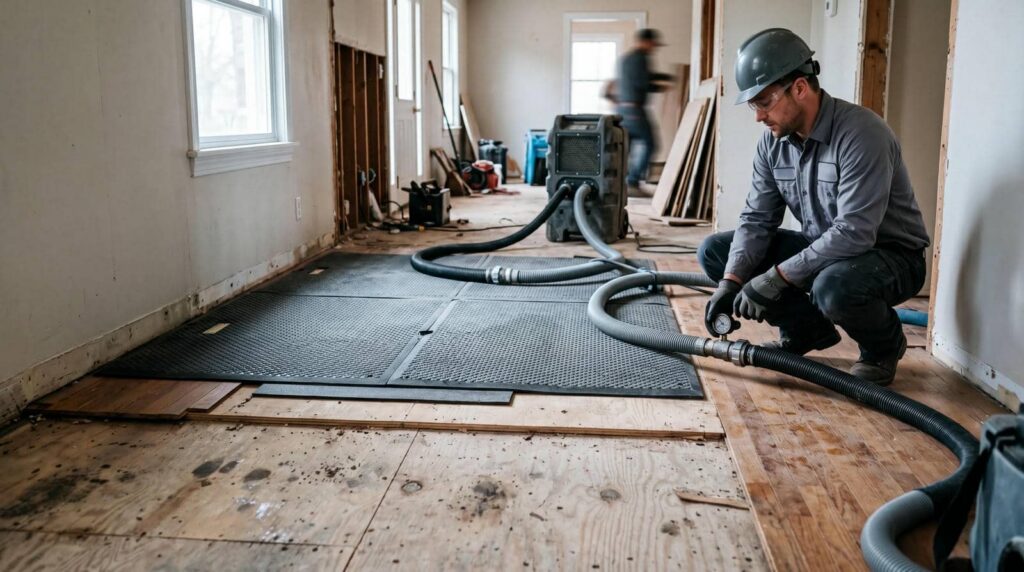
When floodwater hits, you need to act fast to limit structural damage and mold risk. First, shut off the water source if you can do it safely, then remove standing water with a pump or wet vac. After that, strip out soaked materials and dry hidden spaces before they trap moisture. The final steps in flood cleanup matter just as much, and they’re where many cleanup jobs go wrong.
Key Takeaways
- Stop the water source immediately by closing the main valve or calling a plumber if needed.
- Remove standing water quickly with a wet vac, pump, or towels, depending on the amount.
- Remove soaked drywall, insulation, and carpet right away to prevent mold growth.
- Dry floors, walls, and hidden spaces with fans, dehumidifiers, and good airflow.
- Clean and disinfect hard surfaces, then inspect for damage before restoring power.
Shut Off the Water Source Fast
The first thing you need to do is stop more water from entering the space. Find the water source fast and close the main valve or isolate the affected line if you can do it safely.
If you can’t reach it, call your utility provider or a licensed plumber right away. During your emergency response, shut off power to wet areas only if the panel is dry and accessible.
Wear gloves and sturdy shoes, and keep your team clear of slippery floors. Document what you’ve done, then mark the valve so anyone on site can identify it.
Acting quickly helps protect the structure, limits further damage, and keeps you connected to the people helping you recover.
Remove Standing Water Quickly
Once you’ve stopped the source, get the standing water out as fast as you safely can. Use water extraction techniques that match the depth and area: a wet vac for shallow water, a pump for larger volumes, and towels only for small leftovers.
Move in a steady pattern so you don’t miss pockets hiding under furniture or along edges. Work from the highest point toward the lowest to help water flow toward your pickup point.
Keep extension cords away from wet zones and wear protective gear if needed. Good emergency response planning means you already know where tools are stored, who does what, and how to call for backup.
You’re not alone here; fast, organized action helps your space recover sooner and safer.
Remove Flood-Damaged Materials Before Mold Grows
After the water is gone, pull out any porous materials that soaked it up, because mold can start growing fast in damp conditions.
You should remove soaked drywall, insulation, carpet pad, ceiling tiles, and particleboard right away. These materials hold moisture deep inside, so cleaning the surface won’t make them safe.
Bag each item as you go, then keep the area clear for safe material disposal. Wear gloves, boots, and a mask to protect yourself from debris and contaminants.
If you’re unsure whether a material can be saved, choose mold prevention over delay and discard it.
Work with your cleanup team, stay organized, and mark what’s removed so everyone knows what’s left. Quick action helps you protect the space and move forward together.
Dry Floors, Walls, and Hidden Spaces
Set up fans, dehumidifiers, and open windows to push moisture out of floors, walls, and concealed spaces as fast as you can.
You’ll speed evaporation by lifting wet rugs, pulling baseboards if needed, and spacing furniture so air can move freely. Aim airflow at damp drywall seams, subfloor edges, and cabinet voids, because hidden moisture often lingers there after the surface looks dry.
Check humidity with a meter and keep it low until readings stabilize. Rotate drying techniques: direct air across surfaces, then dehumidify the room, then reopen blocked areas.
You’re not alone in this process; steady, methodical drying helps your space recover safely and gives your crew the best chance to rebuild without setbacks.
Disinfect Surfaces and Inspect for Damage
When surfaces are dry enough to clean, wash hard floors, counters, and other nonporous materials with soap and water, then disinfect them with a product labeled for flood cleanup or household disinfection.
Wear gloves, keep the area ventilated, and follow the label’s contact time so surface sanitization works fully. You’ll want to scrub grout, appliance exteriors, and fixtures, then rinse if the product requires it.
Afterward, inspect walls, trim, cabinets, and flooring for swelling, warping, staining, or soft spots. This damage assessment helps you catch hidden structural problems before mold spreads.
Check outlets, switches, and insulation too, and don’t turn power back on until a qualified professional clears electrical components.
Frequently Asked Questions
How Do I Tell if Floodwater Is Contaminated?
You can’t tell by sight alone; assume floodwater’s contaminated if it came from storm drains, sewage, rivers, or seawater. Watch for odor, discoloration, foam, oil, or debris—clear contamination indicators.
When Should I Call My Insurance Company After Flooding?
Call your insurance company immediately after flooding; delays can hurt your claim. About 1 in 50 U.S. homes files a flood claim yearly. Your flood insurance starts the claims process quickly and safely.
Can I Save Electronics Exposed to Floodwater?
You can sometimes save electronics exposed to floodwater, but act fast. Power them off, remove batteries, and use careful drying techniques. Salvaging devices depends on contamination, corrosion, and prompt professional inspection, so don’t power them back on.
How Soon Should I Document Flood Damage for Claims?
Document flood damage immediately, ideally before cleanup, so you can strengthen claim documentation and capture photo evidence. You’ll protect your case, avoid disputes, and feel supported throughout the process.
What Signs Mean Structural Damage Needs Professional Inspection?
When the walls talk, you should call a pro if you notice foundation cracks, wall warping, sagging floors, sticky doors, or new gaps. You’ll protect your home, and you’re not alone.
Summary
Flood cleanup can feel overwhelming, but acting fast keeps the damage from spreading. Shut off the water source, pull out standing water, and remove soaked drywall, carpet, and insulation before mold takes hold. Then dry everything thoroughly, disinfect hard surfaces, and inspect wiring and structural areas before restoring power. If you think waiting will save money, it won’t—delays usually cost more. With the right steps, you can protect your property and recover safely.